
If you’ve followed me for a while, you know I’m always testing out new products to see what really works for vintage sellers like us.
I’ve used (and sold) Fusion Mineral Paint for years and it’s been a go-to for booth flips and quick makeovers. But when Fusion announced their new line called Alchemy Paint, I had to get my hands on it and see what all the fuss was about.
Today I’m sharing:
- The key differences between Alchemy Paint vs. Fusion Mineral Paint.
- My honest feedback after using Alchemy on a real project.
- A full furniture makeover with Alchemy Paint (before + after included).
This post may contain affiliate links · This blog generates income via ads
What Is Alchemy Paint?
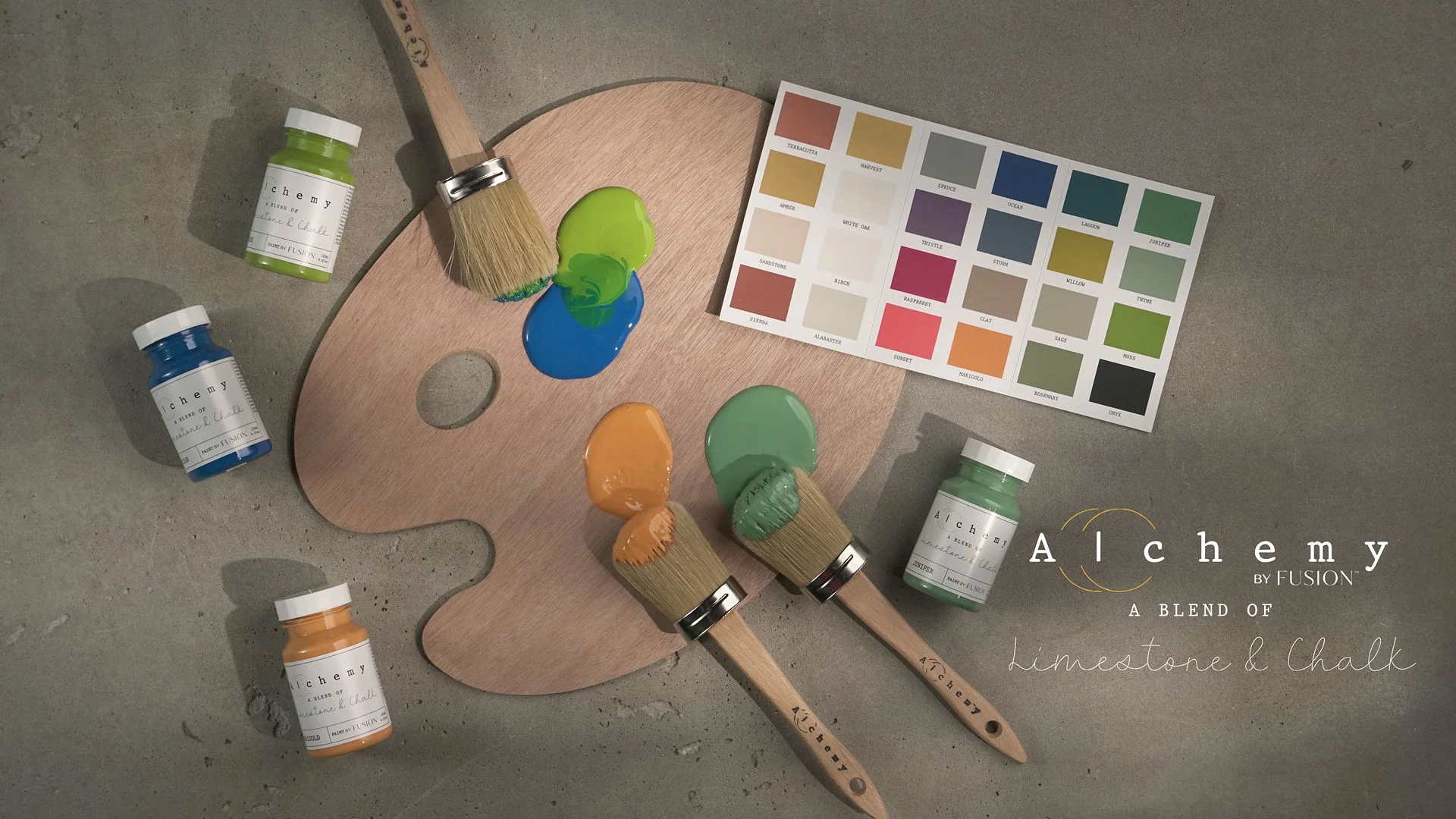
Alchemy is Fusion’s brand-new line, created as a twist on their classic mineral paint. It’s designed to give you rich, saturated color with a velvety finish.
While Fusion is a pure acrylic paint, Alchemy is a blend of acrylic, limestone, and chalk. I would compare it to a classic chalk paint.
Think of it this way: if Fusion Mineral Paint is the reliable everyday workhorse, Alchemy Paint is the bold, artistic cousin you reach for when you want to get a bit more creative.

Alchemy vs. Fusion: What’s Different?
Here are a few key differences when comparing Alchemy Paint vs. Fusion Mineral Paint:
- Finish & Look – Fusion dries to a matte/soft sheen. Alchemy has a more textured finish that looks dimensional, almost layered, even with just one color.
- Application & Ease of Use – Fusion requires a pretty thorough prep of cleaning and scuff sanding. With Alchemy, I did clean the surface and lightly sanded the top, but that was about it. Prep was a bit less overall.
- Distressing – Alchemy distresses much easier than Fusion, with just a fine grit sandpaper.
- Durability & Topcoat – I did apply a wax topcoat to Alchemy, as recommended for furniture and other high traffic areas. Most of my Fusion projects I do not topcoat.
- Color Range – Alchemy’s palette is moodier and richer, with a broader line of bright and saturated colors.
- Size & Price – Alchemy offers a great tester size, which is a good bit larger than the Fusion tester, making it perfect for small projects. It’s also a few dollars less than Fusion.
Would you like to try Alchemy Paint for your next furniture project?
They have generously offered my readers a 10% discount on all Alchemy and Fusion products when you click and purchase here.
The discount will automatically be applied in your cart. Yay!
Alchemy Paint Review
Overall, I enjoyed working with Alchemy! It felt very similar to past chalk paints I have used and I was satisfied with the results I got on my side table makeover.
I did pick the brightest white of the line to use (a color called Birch), which was maybe not the best choice as it took four coats to get full coverage. But that’s really more of an issue with using a bright white, and not something specific to Alchemy.
Once the piece I painted was waxed, it did feel velvety smooth! And the paint passed the scratch test – nothing came off when I scratched at it with my fingernail.
Who is Alchemy best for?
If you’re a furniture painter, reseller, or DIY home decorator, Alchemy is perfect for accent tables, dressers, and other small statement pieces that need to grab attention.
Also if you like the blended look or brighter colors, Alchemy is a great option for your project.
I think for fast booth-fill projects, regular Fusion still wins as you can usually skip the topcoat process.
Side Table Makeover with Alchemy Paint
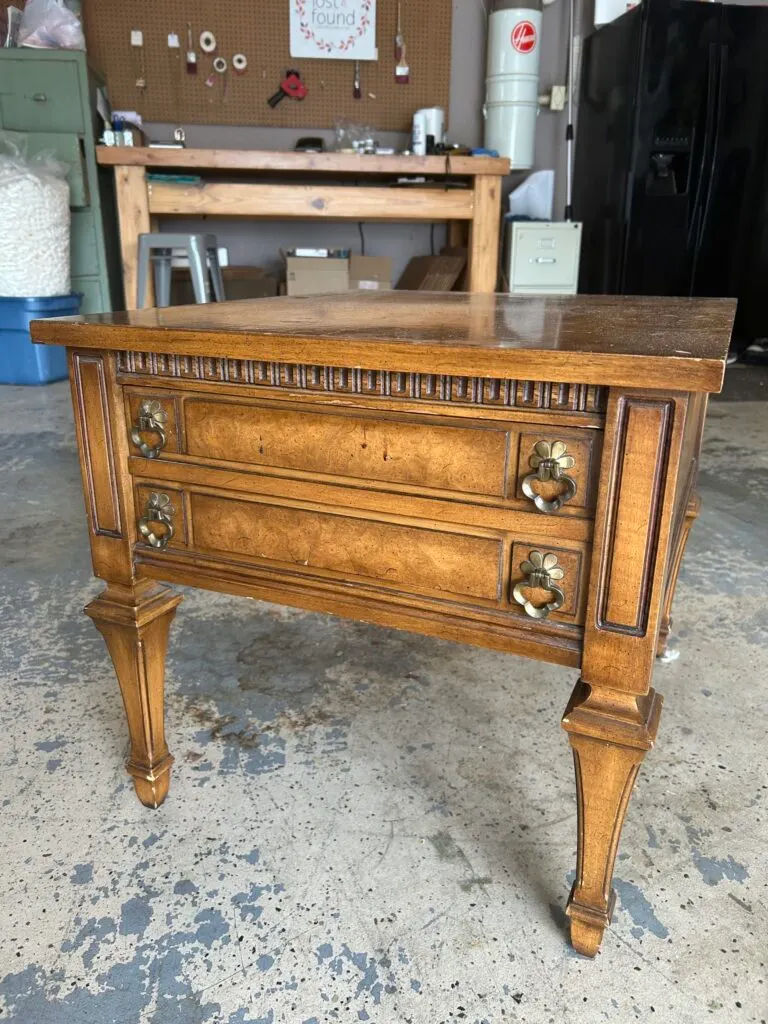
I tested Alchemy on a small side table I grabbed from the thrift store. It had good bones but was looking tired.

Step One Prep:
I cleaned the table first with my favorite cleaner, the Fusion TSP Alternative. This gets off all the grease and grime and will help the paint stick.


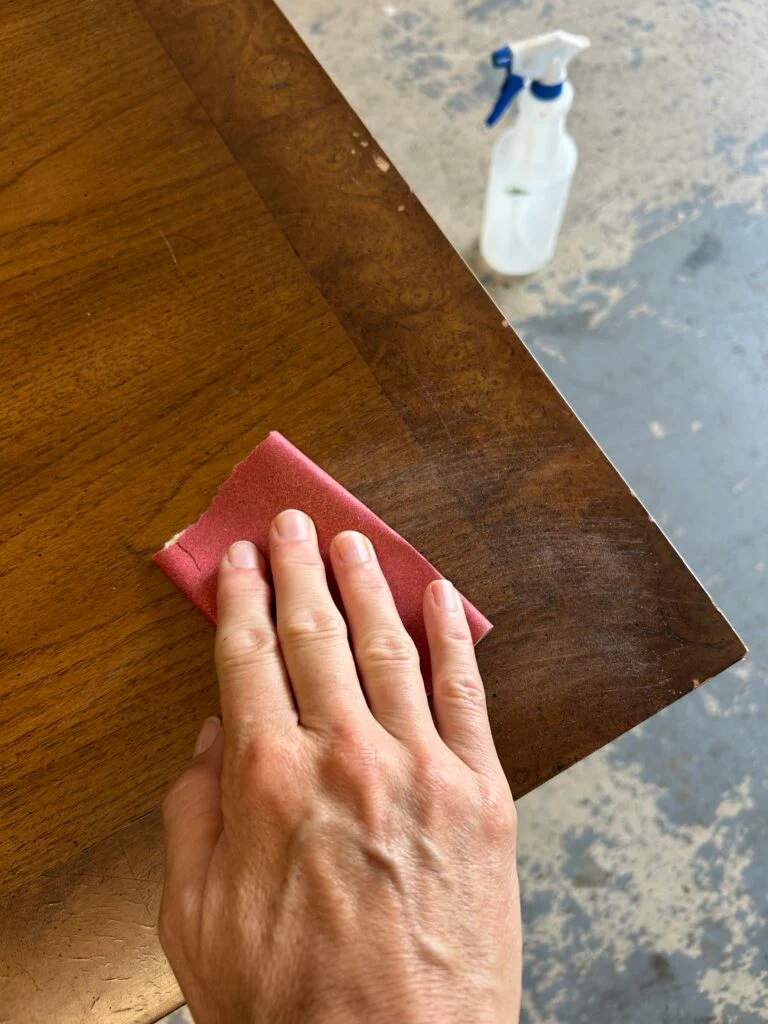
Next, I used a 180 grit sandpaper and lightly scuff sanded the table, focusing mainly on the top.
There were some areas where the finish had chipped, and I made sure to take a few extra minutes to sand those smooth.

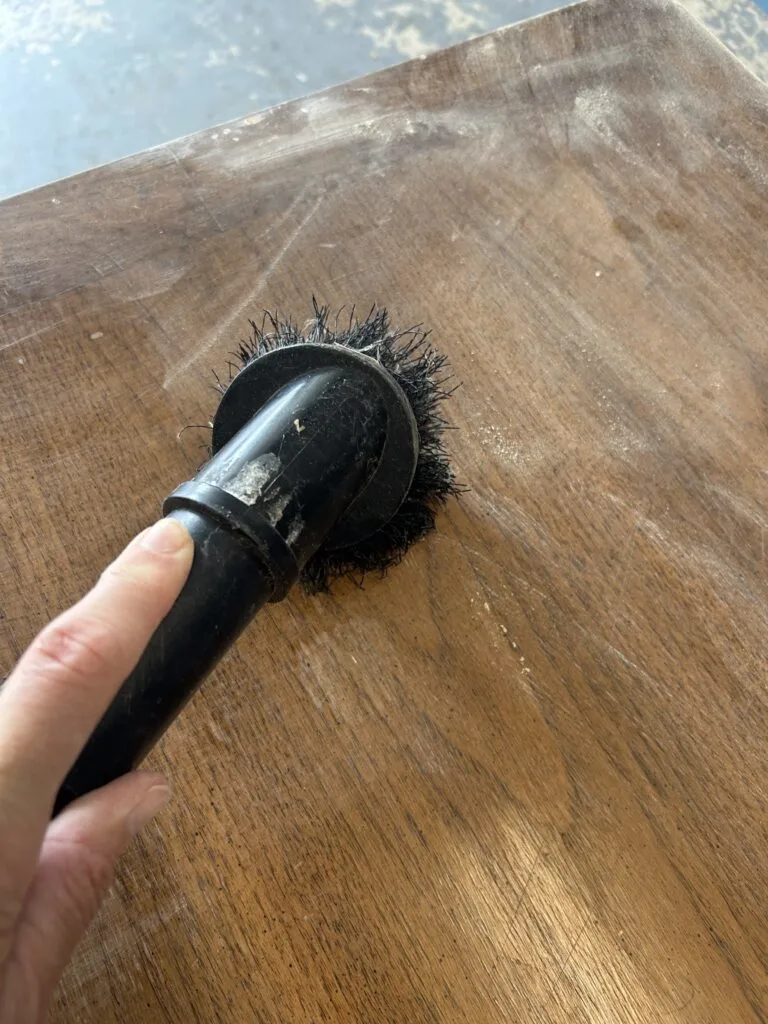
My favorite way to remove sanding dust is to vacuum it off with a wet vac. Then just wipe the piece again with a damp cloth.

Step Two Paint:
The color I chose for this project is Birch. It’s the brightest white of the Alchemy line, which maybe wasn’t the best choice to try first (painting bright white can be hard!). But I thought it would really make the table pop and stand out.

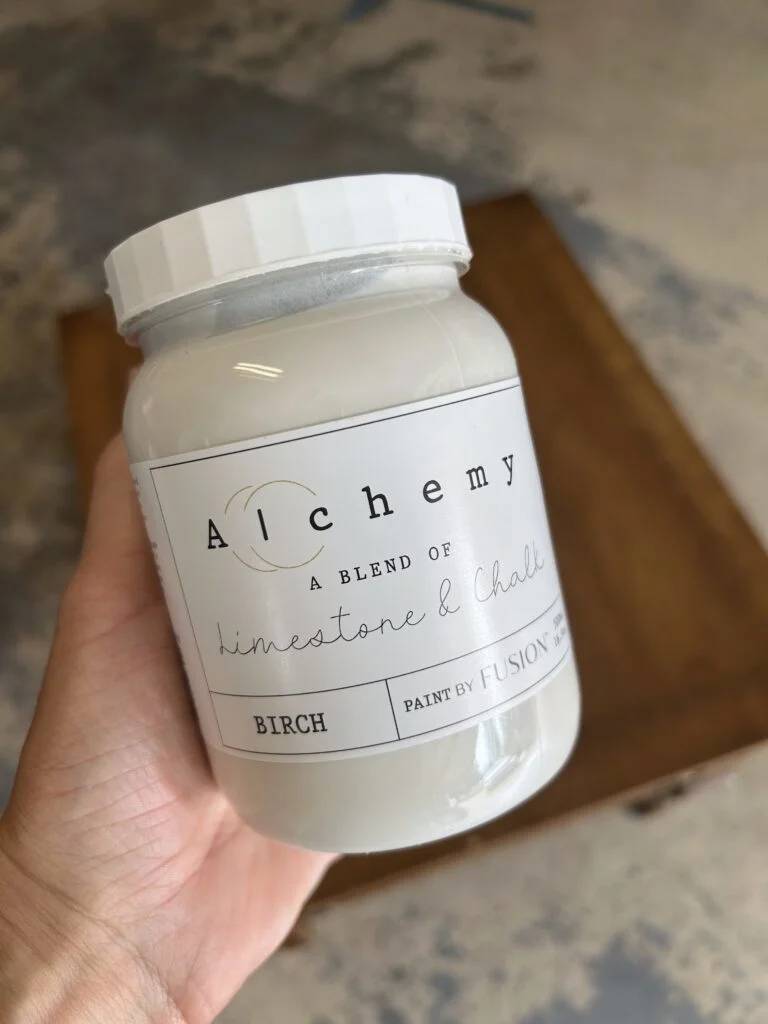


The consistency is a bit thicker than Fusion, but not near as thick as some other chalk type paints I’ve used.
Here is the first coat, and it’s not looking super great!


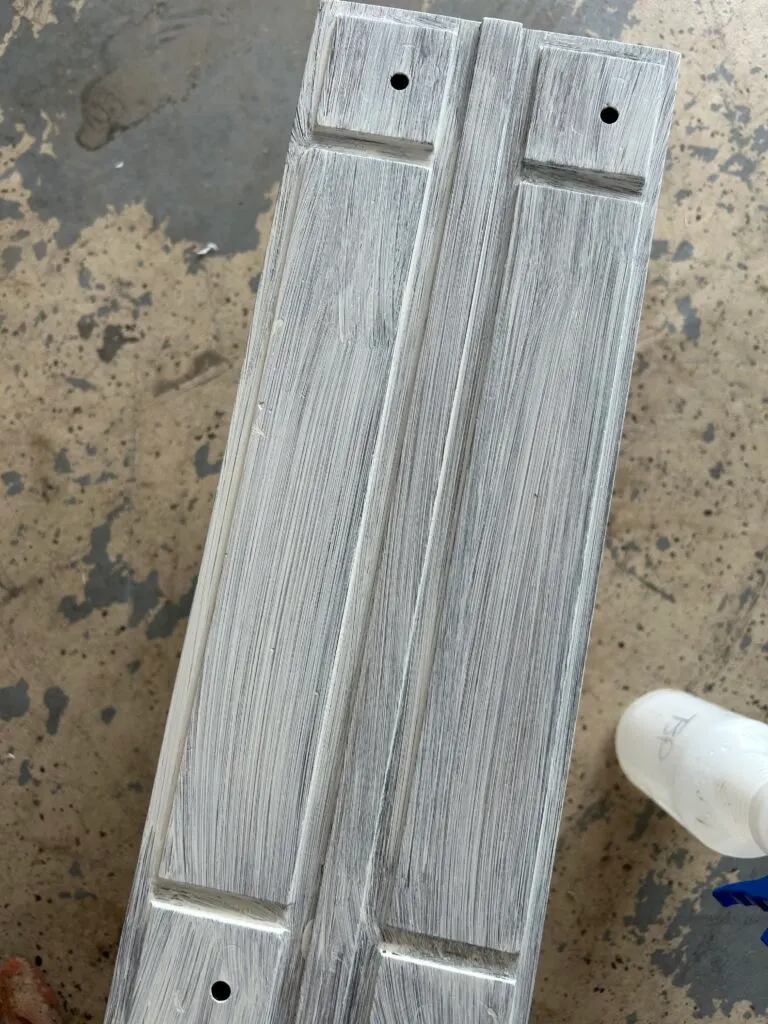
If you’re new to painting, just know that your first coat is always gonna look pretty terrible, especially a color as light and bright as this.
Each coat got better, but it did wind up taking 3 coats on most areas and a touch-up 4th on a few spots to get it fully covered.

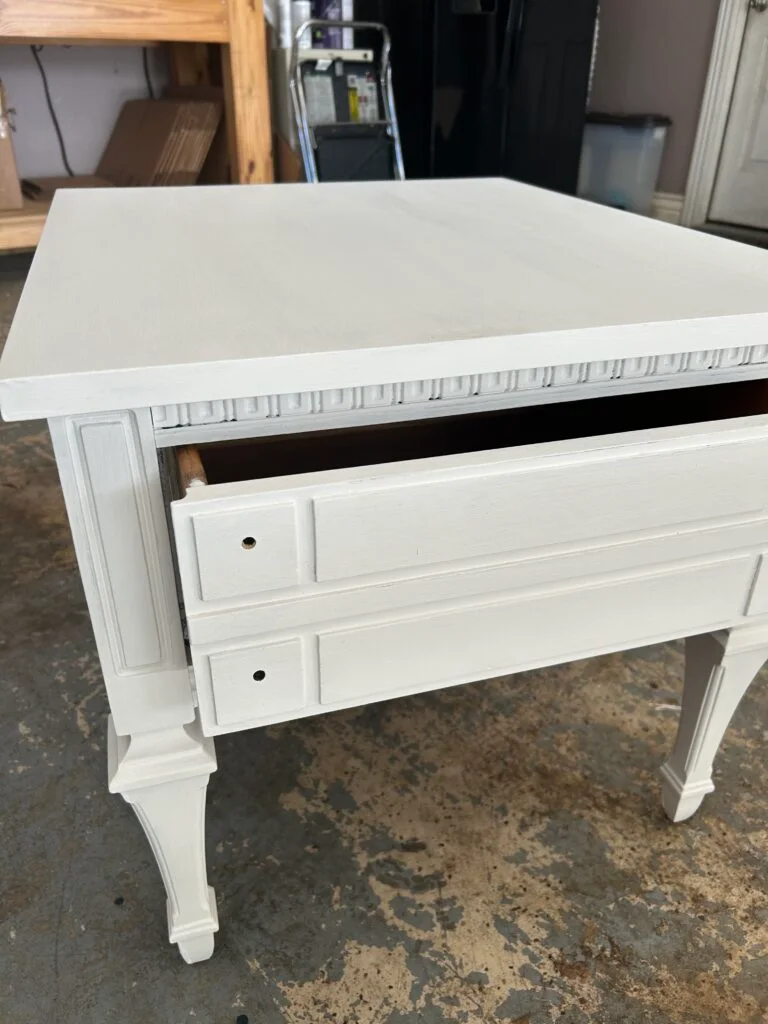
Step Three Finish:
With the last coat dry, it was time to lightly distress the edges. I used a 220 grit sandpaper and just rubbed it along the raised edges and details to help remove a bit of the paint in those spots.

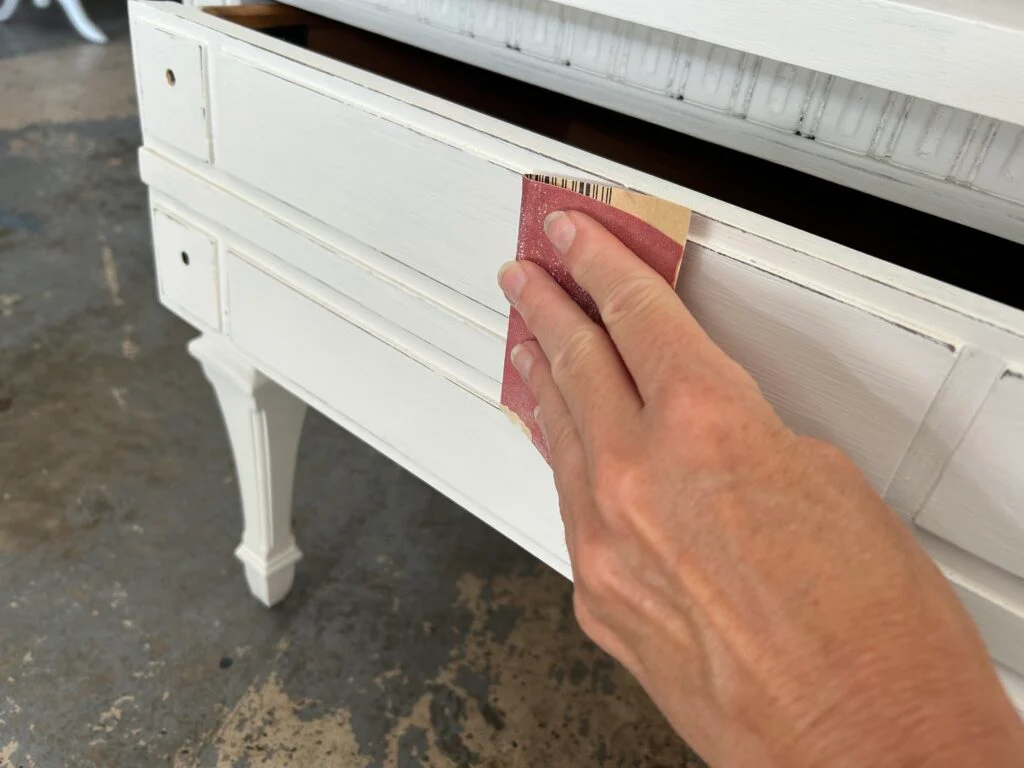
While distressing, I also lightly sanded the flat surfaces to help them feel smoother.
Unfortunately, I forgot to take pictures of the waxing process, so sorry!
I used the Fusion Clear Wax and applied a light coat with a soft brush, then wiped off the excess with an old t-shirt. The wax darkened the white a bit at first, but once it was dry it was back lighter again.
RELATED POST: Best Furniture Wax for Chalk Paint: How to Apply for a Durable Finish
After Photos


Here it is a few days later in my booth space, looking fresh!
And I’m happy to say it sold within just a few days.


Final Thoughts: Should You Try Alchemy?
Alchemy won’t completely replace Fusion for me — but it’s a keeper. I’ll still reach for Fusion on everyday booth-fill projects, but when I want a showstopper piece for resale or home decor, Alchemy will be a great option.
If you’re already a Fusion fan, I definitely recommend trying Alchemy. The finish alone makes it worth experimenting with on your next furniture flip.
Have you tried Alchemy Paint from Fusion Mineral Paint yet? Drop a comment and share your experience — I’d love to compare notes.
And if you’re looking for more makeover inspiration, check out these posts:
The Best Dark Blue Paint Colors for Furniture
Antique Dresser Makeover with Jolie Chalk Paint
How to Stencil a Dresser for a Unique Finish
Black Dresser DIY & 8 Black Painted Furniture Makeovers