
There are some color combinations that come and go, and then there’s blue and white.
It’s crisp without being cold, classic without feeling stuffy, fresh in summer but cozy in winter.
I’ve been using blue and white decor in my own home for over two decades now, and it still feels timeless.
Let’s talk about why blue and white decor has stayed popular for centuries, and how you can start incorporating it today using vintage and antique pieces you can actually find.

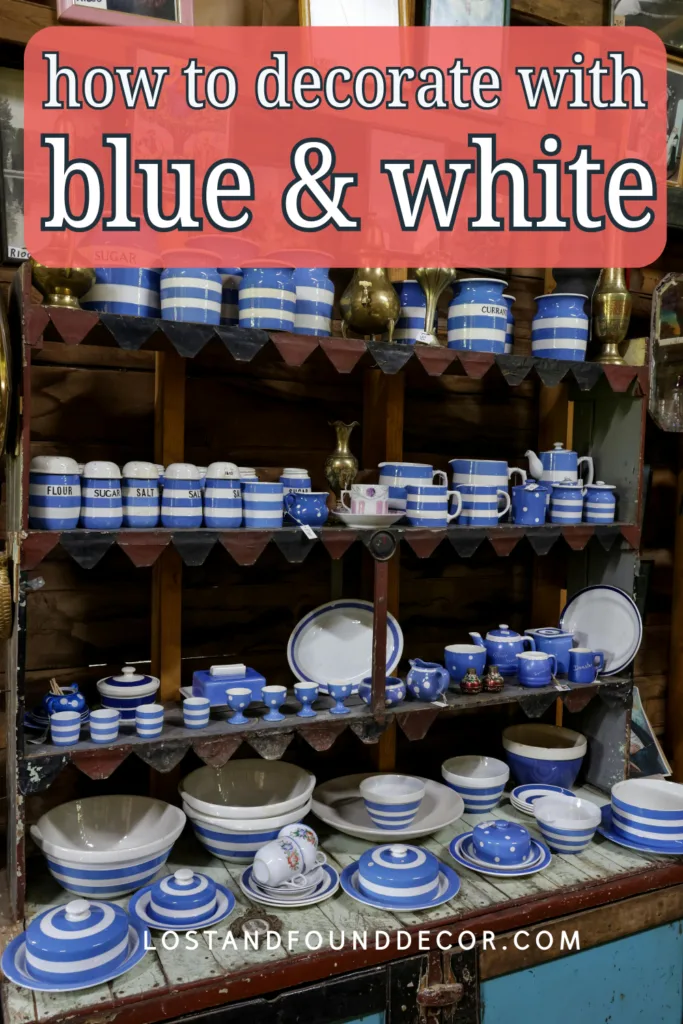
Why Blue and White Decor Is So Popular
Some color combinations date themselves pretty quickly. You can look at a room and immediately know the decade, think the navy/maroon/hunter green palette of the 90’s.
But blue and white doesn’t really do that. It’s truly a timeless color pairing that can last through many design cycles.
It feels clean without feeling stark and cold. It fits in a farmhouse kitchen, a traditional dining room, or even a simple modern space.
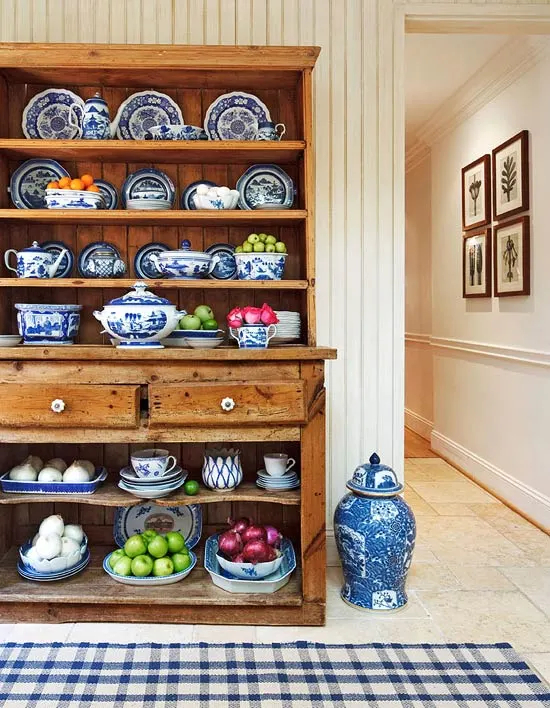
Blue and white also plays well with old wood furniture, which is important if you’re someone who appreciates vintage and antique furnishings in your home.
It’s also one of the easiest color palettes to build over time, which fits perfectly with the current slow decorating movement.

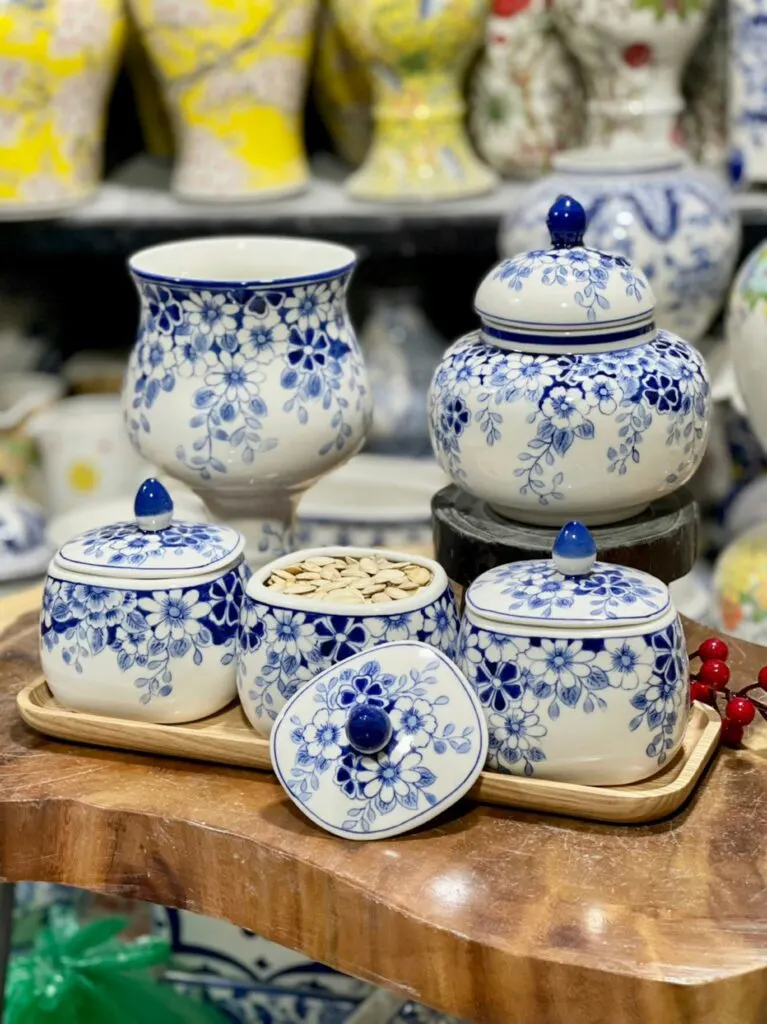
The History Behind Blue and White
Chinese Blue & White Porcelain


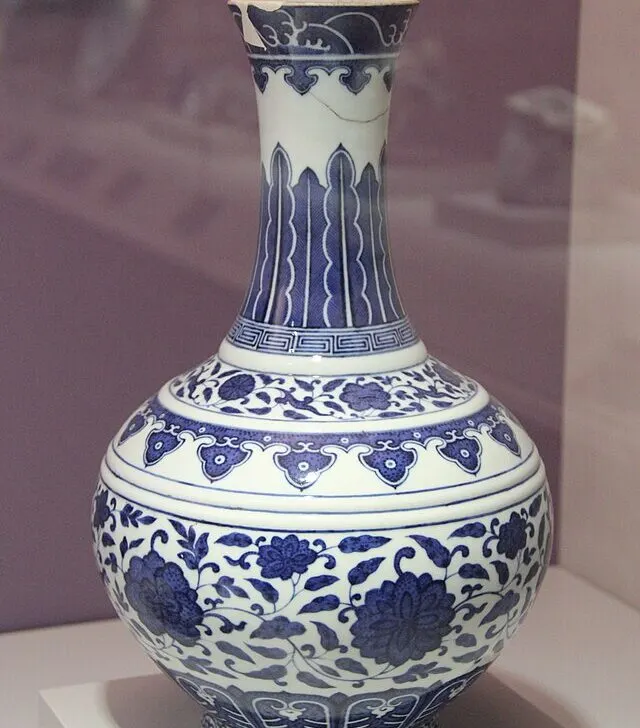

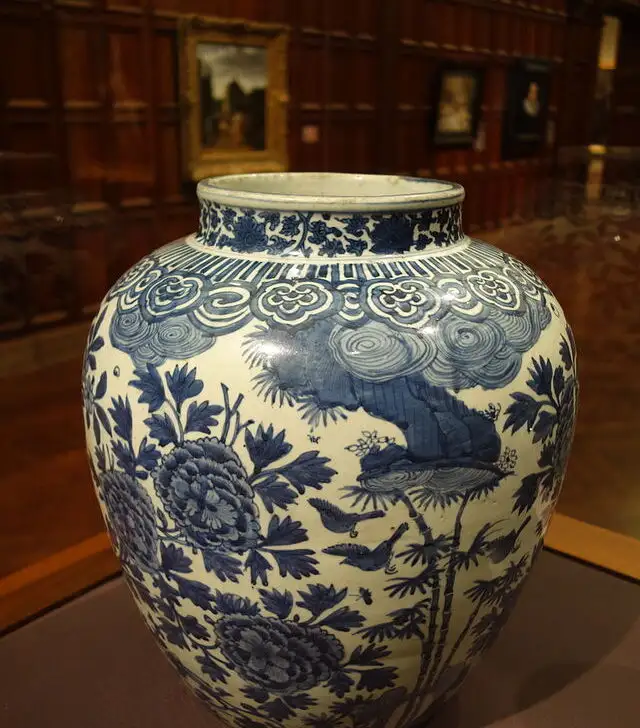
Blue and white ceramics became famous during the Ming dynasty (1368–1644), when cobalt blue designs were painted under a white glaze.
These pieces made their way to Europe through trade and quickly became status symbols. Ginger jars and porcelain plates were displayed prominently in cabinets and on mantels. They weren’t tucked away , they were meant to be seen and admired as status symbols.
Even today, one well-placed ginger jar can be the hero piece of an entire room.
Dutch Delftware

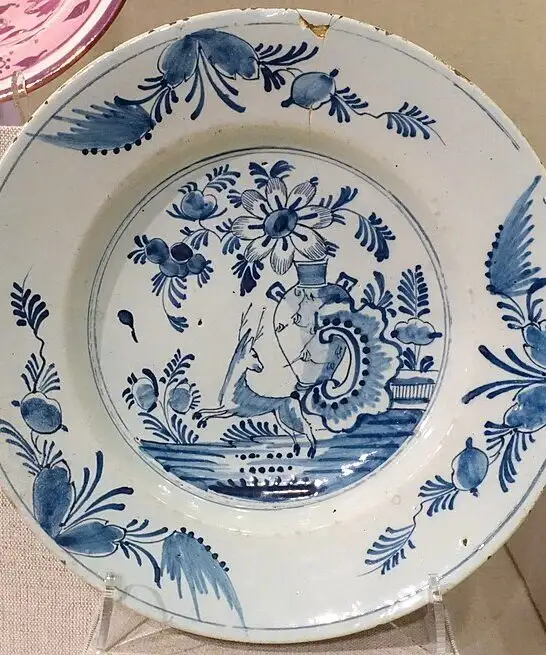


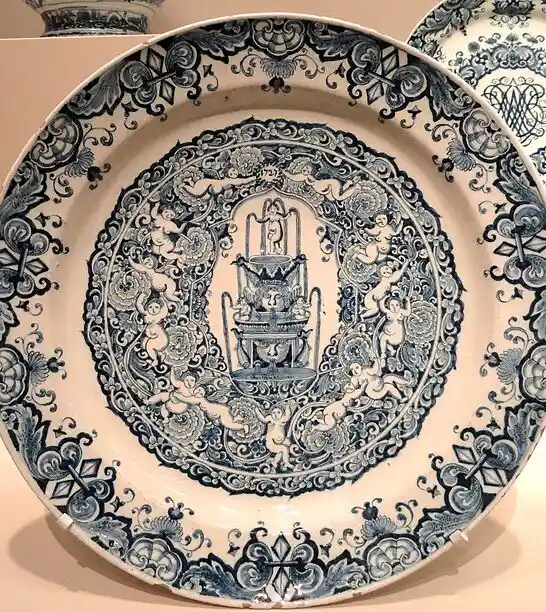
As Chinese porcelain became popular in Europe, potters in the Netherlands began producing their own version, known as Delftware.
Delft pieces often featured windmills, landscapes, or biblical scenes. The look was similar but developed its own personality.
If you want to spot authentic Delft pieces, look for a softer white surface, hand-painted blue details, and a little crackling in the glaze. Truly older examples often show some wear and a tan clay color on the bottom.
English Transferware


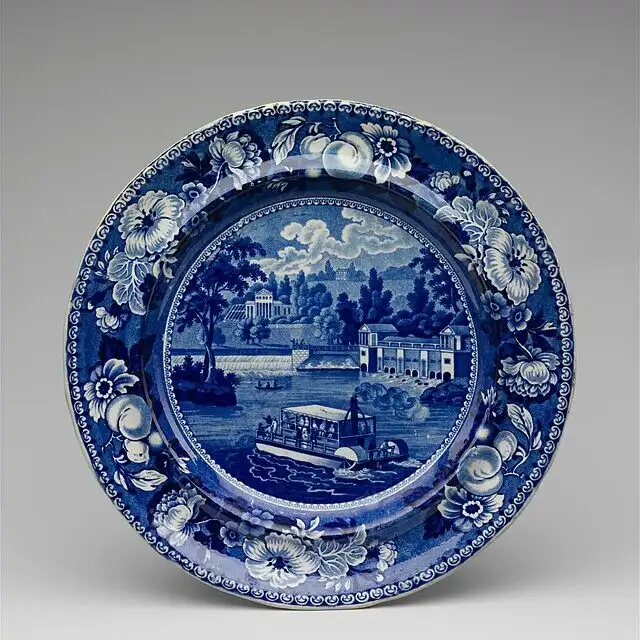


By the 18th and 19th centuries, English potters developed transfer printing techniques that made decorative plates more affordable.
Factories in Staffordshire produced intricate blue scenes, like pastoral landscapes, architectural ruins, and toile patterns.
This is where many American blue and white collections begin, with these pieces making their way across the ocean through family migrations and importing.
The best part is you can still find these pieces pretty easily at flea markets and estate sales. I have a lot of English transferware pieces in my own personal collection.
How to Add Blue and White Without Changing Everything
People often think to redecorate a room they have to start from scratch and change everything. But the good news is that’s not true!
Especially if you want to incorporate blue and white into your decor scheme, you can easily introduce it along with your existing decor.
Try starting with something small, like a single pitcher on a shelf, or a bowl on your kitchen counter. Or add a collage of plates on an open wall.


Textiles are another easy way to bring in blue and white. An indigo pillow or a simple block print runner can shift the feel of a room without replacing furniture.
Blue and white also pairs naturally with antique wood, like oak, pine, and walnut. Even though they are cool tones, they contrasts with the warmth of wood perfectly.
You don’t have to match shades of blue exactly. Different patterns, different eras, even slight wear all add to the look rather than detract from it.

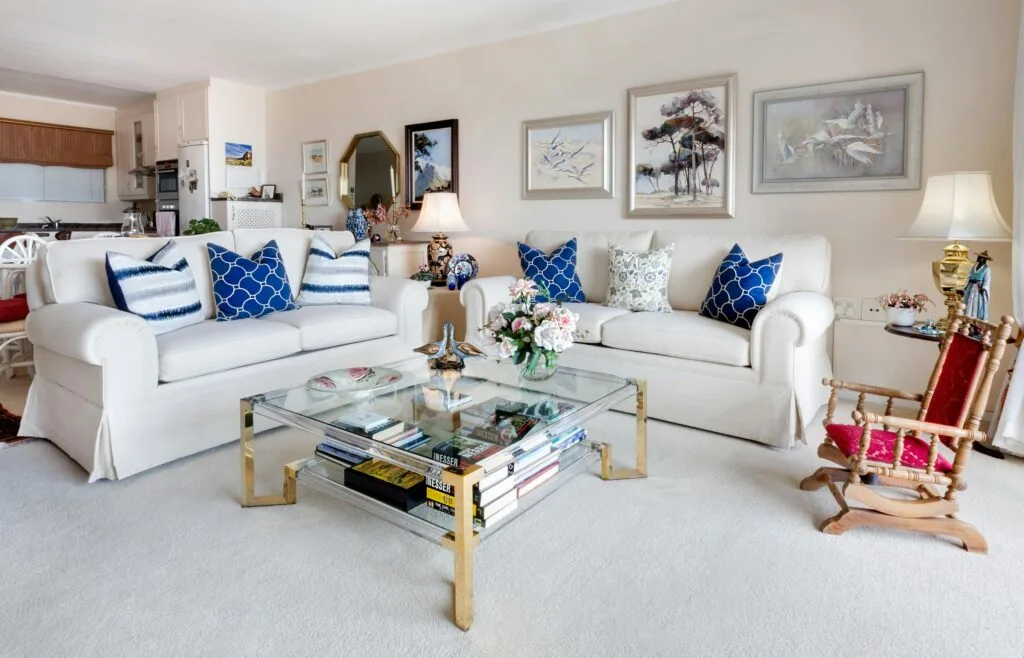
What Colors Work with Blue and White
Blue and white is flexible. You can steer it in different directions depending on your accent color.
-
Brass or Gold – Adds warmth and elegance
-
Natural Wood Tones – Keeps it relaxed and grounded
-
Soft Green – Botanical and fresh
-
Black – Crisp contrast and modern edge
-
Soft Gray – Calm and layered
-
Muted Red (very sparingly) – Traditional European feel
The key to adding more color is restraint, blue and white works best when it doesn’t compete with five other loud colors.

Why Blue and White Fits a Collected Home
If you decorate slowly, adding pieces as you find them, blue and white makes even more sense.
You can pick up one plate at a flea market and another six months later. You can mix Chinese-inspired pieces with English transferware. You can use ironstone right next to something more refined.
It doesn’t need to be perfect, in fact, it’s better when it isn’t.
Using a blue and white decor scheme is a great way to build a home that feels both classic and lived in.

