
This post shares practical slow decorating tips for how to style your home on a budget and with intention.

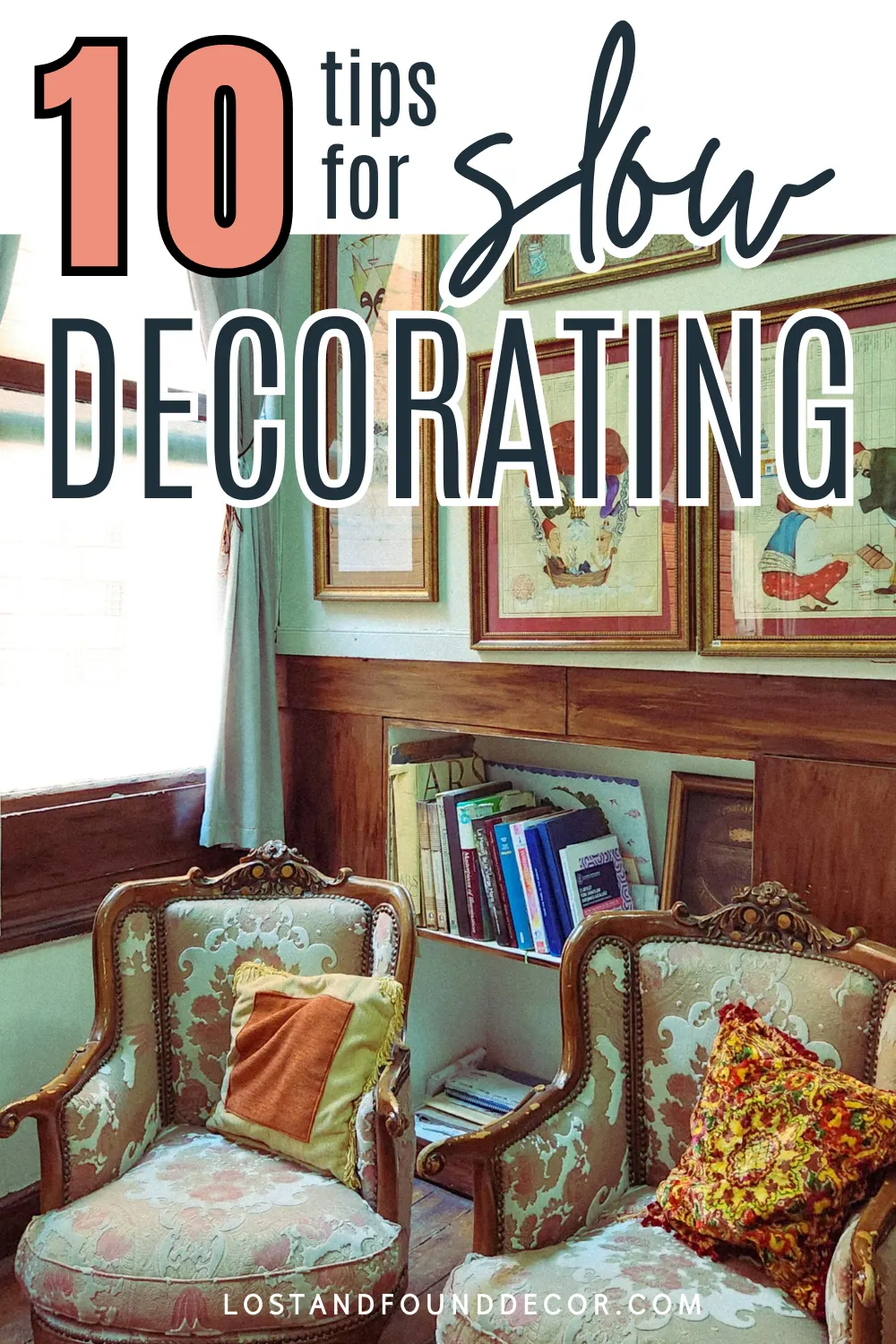
There’s a quiet shift happening in the retail and home interior world. You can feel it in the way people are shopping less impulsively, and in the way homes are starting to look more lived-in and less like a catalog.
There’s a growing desire to pause before buying, rather than filling a cart just to feel productive. The Temu and Amazon hauls that filled our social media feeds last year now feel off-putting and even a bit stressful.
Why are we constantly buying so much stuff? Is this really the way to build a home you love?
This shift we all feel has a name: slow decorating. It’s part response to the economy and inflation, part growing interest in vintage re-styled, and part frustration with our growing piles of unwanted trends we snapped up 3 years ago.
Let’s explore a bit more and see how you can adopt the slow decorating mentality.
What Is Slow Decorating?
Slow decorating is the idea that your home doesn’t need to be “finished” all at once.
Instead of rushing to fill every wall, corner, and surface, you let your space evolve over time, one thoughtful piece at a time.
You live in your home. You notice what’s missing. You wait for the right piece instead of the right now piece.
It’s decorating with intention and patience, and with the belief that a collected space will serve you better long term than one rushed together with inexpensive, mass market finds.
Just recently I had a conversation with a young couple who are new homeowners. They didn’t want to host anyone in their home until all the projects and decorating were “finished.” I just smiled and gently reminded them that a welcoming home isn’t one where every wall and space is perfectly decorated, but rather one where you can have warm conversations and enjoy each other’s company.
Slow decorating is what this couple needs. It takes the pressure off your home decorating and lets your space naturally grow.
And the best part about it? I believe over time your home will actually look better and cost less when you don’t rush the process.
Why Slow Decorating Fits Right Now
Slow decorating isn’t trending because it’s charming or nostalgic. It’s trending because people are tired, myself included!
Tired of rising prices.
Tired of buying things twice.
Tired of watching “$500 home hauls” scroll by while trying to stretch a real household budget – can I get an “Amen!”
The mindset right now is shaped by a very practical reality: money matters more again.
Inflation may ebb and flow, but the habits it created have stuck. People are thinking harder before they buy and they’re asking whether something will last, not just whether it looks good on a screen.
Slow decorating fits this moment because it’s a quiet refusal to play the fast-consumption game.
A Shift Away From “Haul” Culture
For years, decorating content online rewarded volume: Big carts, quick flips, and rooms redecorated in a weekend.
But the downside of all that rushing and cart-stuffing is catching up.
The cheap furniture is wearing out, the trendy “must-have” of last year now sits in your trash, and those “budget” buys add up, often costing more over time than one well-made piece ever would.
Slow decorating pushes back against that cycle. Instead of asking, “What can I buy right now?” it asks, “What’s actually worth bringing into my home?”
And that shift alone creates living spaces that grow over time and under budget.
In our social media driven world, slow decorating can be in a way, a quiet rebellion.
Choosing to decorate slowly is choosing to step out of comparison mode and into ownership mode. You claim ownership of your space, your budget, and your values, instead of buying whatever pops up from the next online influencer or Facebook ad.

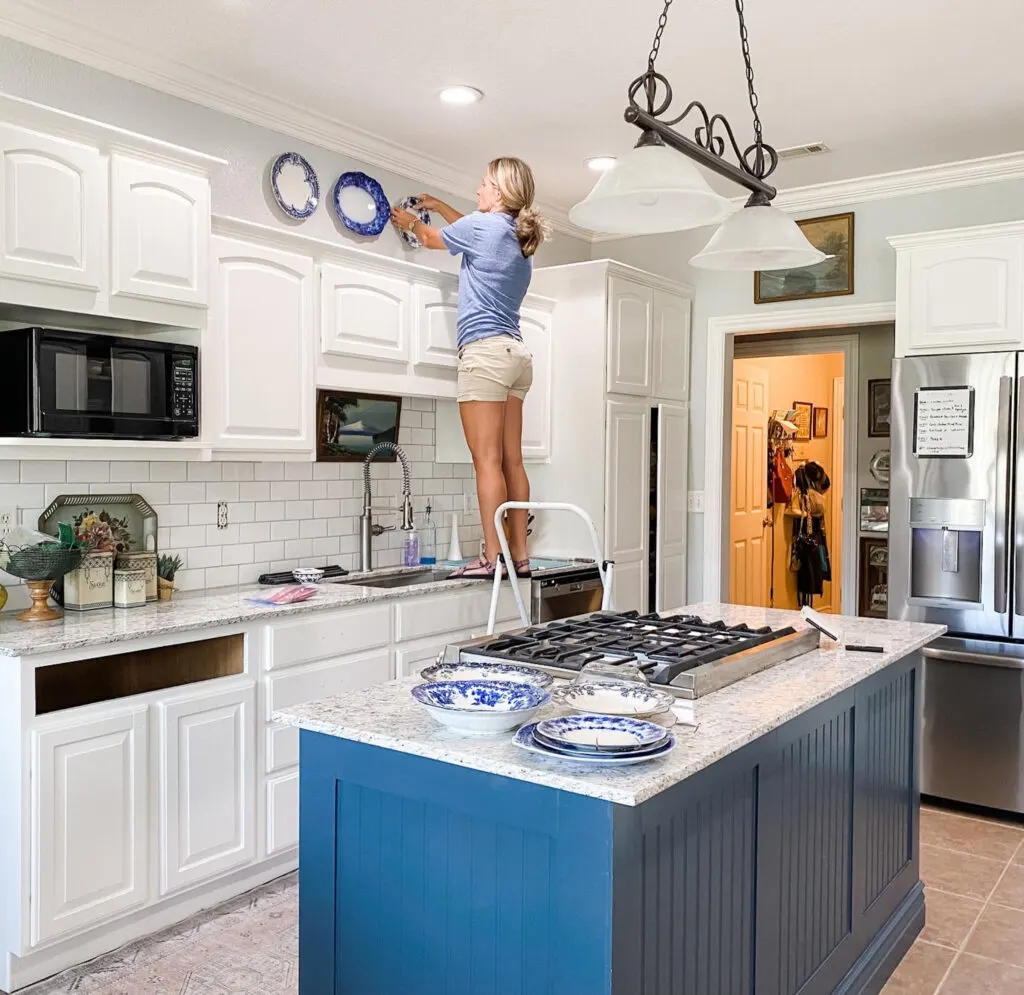
Saving Money Without Sacrificing Style
One of the most overlooked benefits of slow decorating is that it reduces financial pressure without stripping away beauty.
When you stop trying to finish rooms instantly:
-
You avoid panic buying
-
You wait for better prices
-
You find vintage pieces that outperform new ones at a fraction of the cost
-
You spread purchases over time instead of absorbing big hits all at once
Slow decorating doesn’t say “don’t spend,” but rather “spend on purpose.”
Not only is that smart spending, but your home actually ends up looking more expensive, not less.
Choosing Quality Over Speed with Furnishings
Current homes and spaces are starting to reflect a deeper value shift that says quality is winning again.
People are rethinking particle board, noticing loose joints, and realizing that fast furniture often comes with a short lifespan.
Vintage and antique pieces stand in contrast to that. They’ve already proven they can survive decades of use and can live many different lives.
Solid wood furniture is repairable and can be styled in multiple ways. For a few years you can enjoy a piece as painted, then strip off the paint if you like and refinish to have a stained piece.
With stores full of inexpensive new pieces, it may seem more budget friendly to just toss out your broken and worn furniture to grab something else from the store floor.
But over time, purchasing multiple of those pieces that last just a few years can add up, and before you know it, your overall decorating and furniture cost is more.
This is where slow decorating can become a form of long-term thinking. Invest in something better quality now to save yourself money in the future.
Why Vintage & Antiques Are the Backbone of Slow Decorating
You just can’t rush a good vintage find.
You have to be on the hunt or wait for the right thing to come around. When vintage pieces are the bones of your style, you’re forced to be patient.
Vintage and antique pieces already come with patina, history, character, and a sense of permanence.
They weren’t designed to be replaced in two years, but were built to last decades, sometimes centuries. That alone makes them a perfect fit for slow decorating.
Instead of buying five trendy items, one solid vintage or antique piece can anchor an entire room and grow with you as your style evolves.

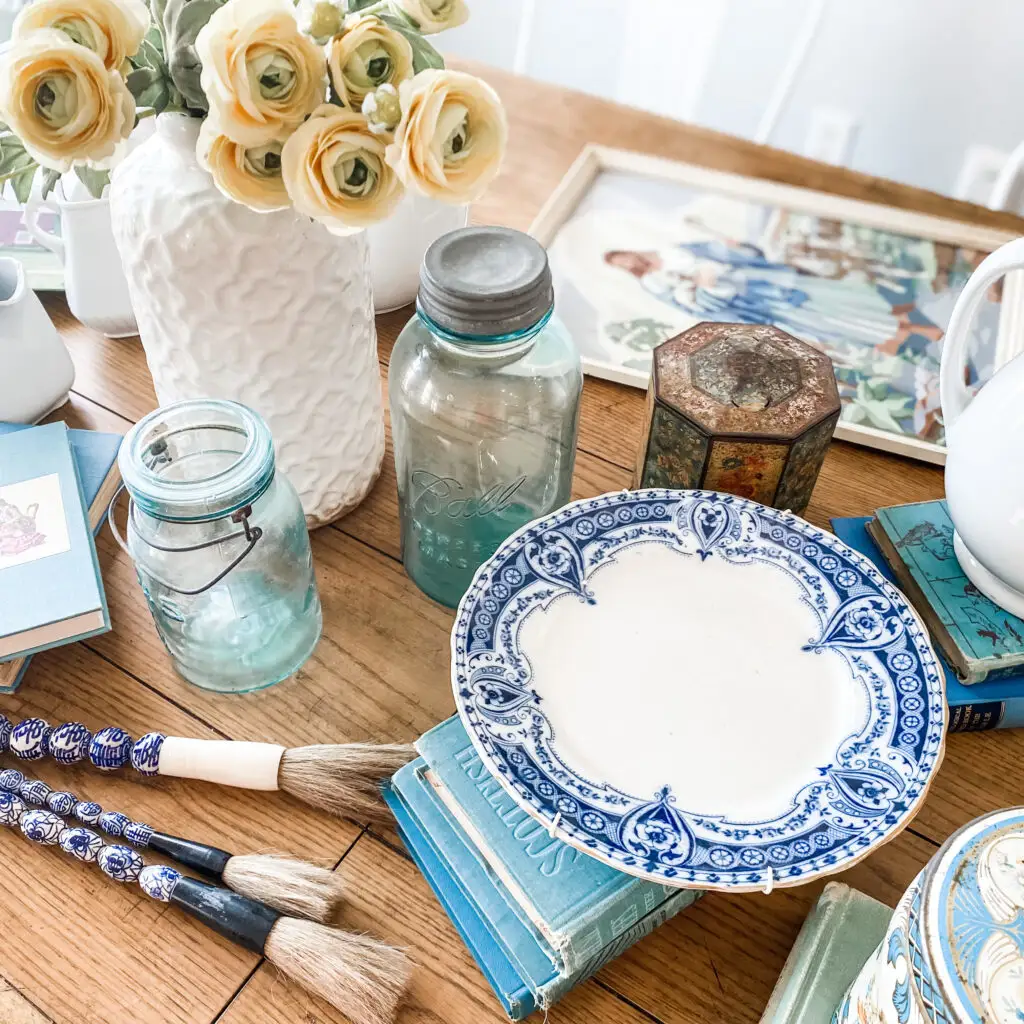
10 Practical Ways to Start Slow Decorating Today
You don’t need to overhaul your house to adopt this mindset. Instead, start with small changes. Here are 10 ideas for how to incorporate slow decorating into your lifestyle and your spaces.
1. Stop Shopping to “Finish” a Room
If something feels off, live with it for a bit. Pay attention to how you use the space before deciding what belongs there. You may be surprised with what spaces you leave empty and what you actually want to have out in the long run.
2. Choose One Anchor Piece at a Time
Look for one meaningful item, like a beautiful vintage lamp, an antique cabinet, or a well-worn rug, and let everything else build around it naturally. Some of my favorite antique pieces have been used in many ways and in many different rooms over the years.
3. Leave Some Walls and Corners Empty (On Purpose)
Empty space isn’t failure, it’s breathing room! Let your home have pauses, not just statements. When you feel the need to fill every spot, you can feel pressure to spend money on filler instead of waiting for the right piece that speaks to you.
4. Source with a Story in Mind
Ask yourself: Where could this have lived before? Pieces with history add depth and provide great conversation for any visitors to your home. Your home is more interesting when you incorporate pieces that have lived previous lives somewhere else.
5. Let Time Be Part of the Design
The best homes aren’t decorated in a weekend, they’re collected over years. Trust that process and enjoy the ride! Going out on the hunt for the right piece can become a fun hobby rather than a chore to get finished.

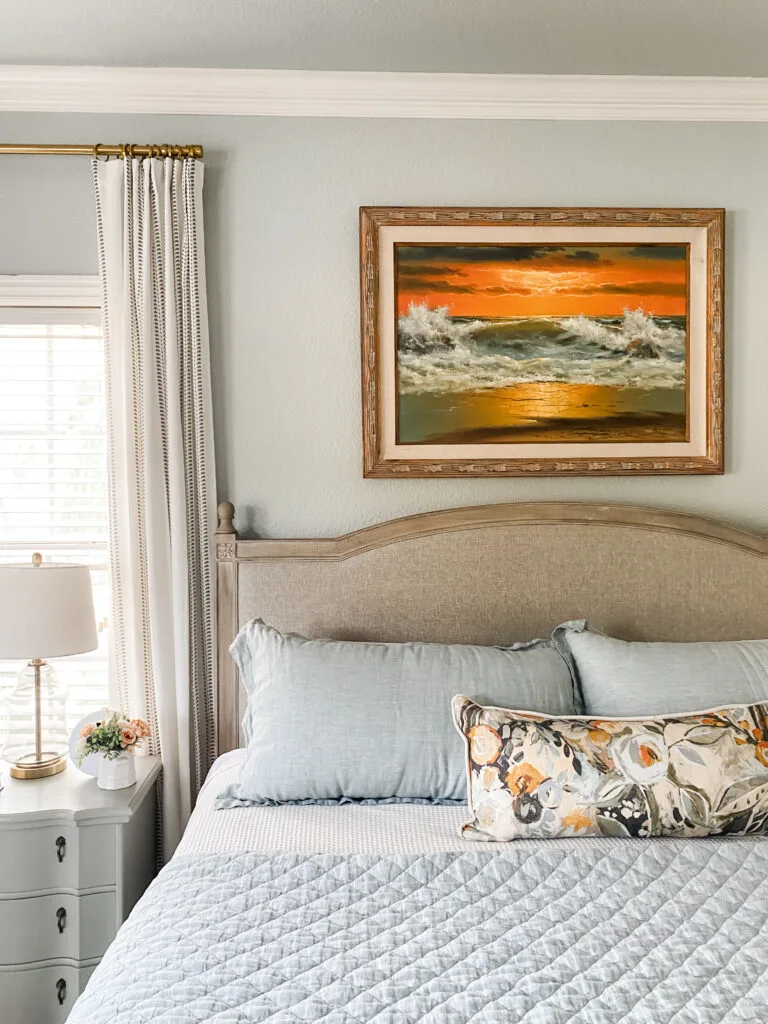
6. Include Homemade Touches for an Imperfect Feel
Some of my favorite decor is artwork from my kids. Handmade pieces, whether inherited, gifted, or made with your own hands, help your home reflect your life instead of a shopping list. Can you display an old blanket your grandmother crocheted or try your hand at your own DIY decor? Upcycle some old coffee cans into planters or paint a few old picture frames to update thrift store art with a handmade touch.
7. Repurpose Before You Replace
Before buying something new, ask yourself if something you already own could do the job. A small side table can become a nightstand. An old crock can hold utensils or paintbrushes. Slow decorating often reveals that the solution is already in your house.
8. Don’t Buy Sets—Build Collections
Matching sets speed things up, but they also flatten your home’s personality. Instead of buying items designed to go together, collect pieces over time that belong together. Mixed woods, varied finishes, and slightly mismatched frames create depth and character that’s unique to you.
9. Keep a “Wish List,” Not a Shopping Cart
When you notice something missing, like lighting, storage, art, write it down in a journal or notebook instead of buying immediately. Over time, you’ll see patterns emerge. You’ll start to see exactly what you’re looking for, which makes it easier to spot the right piece when it finally appears.
10. Edit as Intentionally as You Add
Slow decorating isn’t just about what you bring in, but also about what you let go of. If something no longer fits the direction your home is taking, it’s okay to release it. Editing creates space for better pieces and keeps your home from feeling cluttered or stuck.
With Slow Decorating You Get A Home That Grows With You
Slow decorating isn’t about doing less, but rather about choosing better.
When you adopt a slow decorating style, you can create a home that reflects your values, your rhythms, and your life as it unfolds. A home that doesn’t rush, but still feels settled, even if it’s never “done.”
And in a world that’s constantly pushing faster, newer, and more, slow decorating feels like a welcome breath of fresh air.
You May Also Enjoy These Posts about Decorating!
8 Coffee-Themed DIY Projects with Free Printable
How to Wash an Old Quilt with Stain Removal Tips
20 Best Ever Thrifted Finds for Home Decor
Tan, Blue, and Blush Living Room Decor


David
Sunday 25th of January 2026
This post came at the right time for me. We just moved to a new home on December 10th, yes crazy over Christmas and the end of the year, but the timing worked out right. With the new house, I have been doing exactly what you advise. Part of the imputus was because we have a larger house and different spaces. I have been looking at my decor and deciding what should stay and what should go. I don't want to part with some of my decor pieces but they have gone into a closet that can be used to shop, when I need to make a change. I have done this for years and it has served me well. I would recommend you suggest this in a future blog. Anyway, I have been looking at empty spaces and eventhough I feel the need to fill it now, I have been seitting back and looking for pieces that really speak to me. Thanks for all your wisdom. You will not remember me but we met with I made the trip to downtown McKinney to meet you in person. You were online and posting about your booth in the antique mall. I now live in Hewitt, TX and enjoy an entire new life. Hope you and your family continue to be blessed and do well.
Jody
Thursday 22nd of January 2026
Great article and one I believe in 100%, even though I didn't have a name for it. Homes have much more depth and character when assembled with thought and intent. Don’t be afraid to add something quirky, odd or in a color you don’t normally use. It’s these items that make a room sing. I believe that a home is never “done”. It should be ever evolving, even if you are not buying anything new. Rearranging the furniture, swapping throw pillows, displaying collections are ways to make a room feel fresh.