If you’re thinking about renting your first antique booth, you’re probably focused mostly on the fun stuff, like finding inventory, planning your displays, and dreaming about making your first sale.
I get it! Starting a new business is an exciting time and it can be tempting to jump at the first opportunity to get going.
But while most antique booth businesses are pretty easy to start, there is still one place of “official business” that deserves your close attention: the antique booth lease.
Most malls are going to require you sign a lease of some kind, which is actually a good business practice. A written lease helps protect both the owner of the mall and you, and can give everyone clarity on what’s expected and how the process will work.
I remember it was scary when I signed my first booth lease! Some of what I was reading felt unfamiliar to me, which was a bit overwhelming.
Many antique booth renters are trying out a business for the first time, and signing a binding contract is a big deal.
So in this post today, I’m going to break down what you usually find in a standard antique booth lease. And also share eleven things I recommend looking for, plus additional questions I would be sure to ask.

1. Understand the Total Cost
Every lease will include the base monthly rent you are responsible for. But sometimes there are additional expenses that are outlined in the lease.
Some of can be:
- Sales commission (a percent of your sales the mall owner takes)
- Credit card processing fees
- Advertising or marketing fees
- Required insurance
- Booth maintenance or cleaning fees
- Move-in fees
- Work requirements or fees paid in exchange.
A booth that sounds inexpensive at first can become much more expensive once all the fees are added together. So read the lease thoroughly and make note of any potential additional cost you could incur while you run your business at that location.
Make sure you understand your true monthly cost before signing a lease.
2. Know the Length of the Lease
Not every antique mall offers the same lease terms. Some leases are month-to-month, while others require a six-month or one-year commitment. Some even offer different monthly rental rates based upon the length of the lease you choose.
If this is your very first booth, I generally like the flexibility of a shorter lease while you’re learning the business. My first lease was only six months, and I had the money already in the bank to cover the entire lease’s rent (at $60 a month, it was $360 I had set aside).
Being able to start my business on this firm financial footing was important to me and to my family. And as a brand new booth owner, I was not comfortable committing to a full year so a six month option was really helpful.
Other important lease term information you want to look for:
- How much notice is required if you decide to leave?
- Is there an early termination fee?
- Can the lease be transferred if your circumstances change?
Knowing your options ahead of time can save you a lot of stress later.
3. Ask About Minimum Sales Requirements
Some antique malls require vendors to maintain a certain level of monthly sales. And as a new booth owner, it’s easy to be optimistic and assume your booth will be so amazing that you’ll have no issues!
But antique booths are often seasonal and have the same ups and downs as the rest of the retail world. Plus if something happens outside of your control that interrupts steady business, like road construction or local layoffs, you may find yourself not making the sales threshold.
To clarify, ask if your sales fall below that amount:
- What happens?
- Will I receive a warning?
- Can my lease be terminated?
- Could my booth be moved?
Every mall handles this differently, so it’s worth understanding their expectations before you commit.
4. Find Out How the Sales Floor Is Staffed
One of the biggest advantages of selling in an antique mall is having someone else there to help customers while you’re away.
I started my booth when I was 6 months pregnant with my third little boy. I was a young mom with obviously little time to staff my own store, so having someone else sell my items for me was a huge benefit!
Some clarifying staff questions to ask are:
- Are employees always on the sales floor?
- Do they help customers with larger purchases?
- Will they answer questions about merchandise?
- Are booths monitored throughout the day?
- Are mall work days required with my lease?
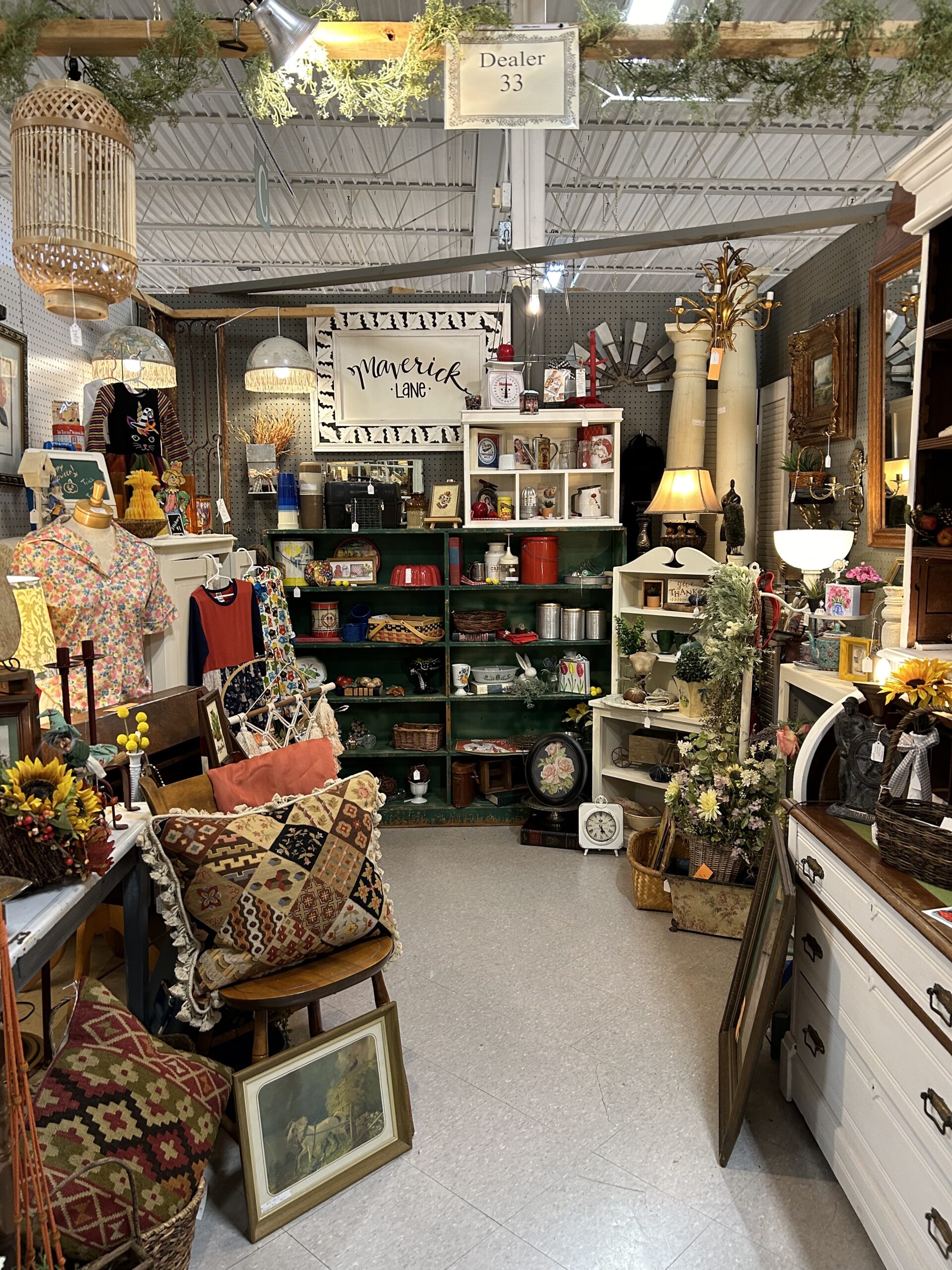
This last question is very important. Some malls require you to work one full or one half a day on the sales floor as part of your lease, or else pay a fee. You want to make sure your family and personal situation can commit to one 9-5 day a month.
And with regards to the rest of the staff, they are really quite important to the success of your business! Friendly, knowledgeable employees can make a big difference in your sales.
I’ve sadly also seen the opposite happen, where customers stop coming because of the poor staff customer service. You don’t want your sales to suffer because the store is not adequately and professionally staffed.
5. Understand Restocking Expectations
Some malls will have in their lease restocking or booth refresh expectations. My most recent location required a weekly visit to “fluff” and restock your booth.
As you look through the lease, look for how often you’re expected to:
- Restock inventory
- Straighten your booth
- Dust and clean displays
- Rotate merchandise
If you live close to the mall, weekly visits may not be a problem. If you’re driving an hour or more, you’ll want to know what’s expected before signing.
6. Learn What You Can (and Can’t) Sell
This is a big one! Don’t assume you can sell whatever you like in the location you choose.
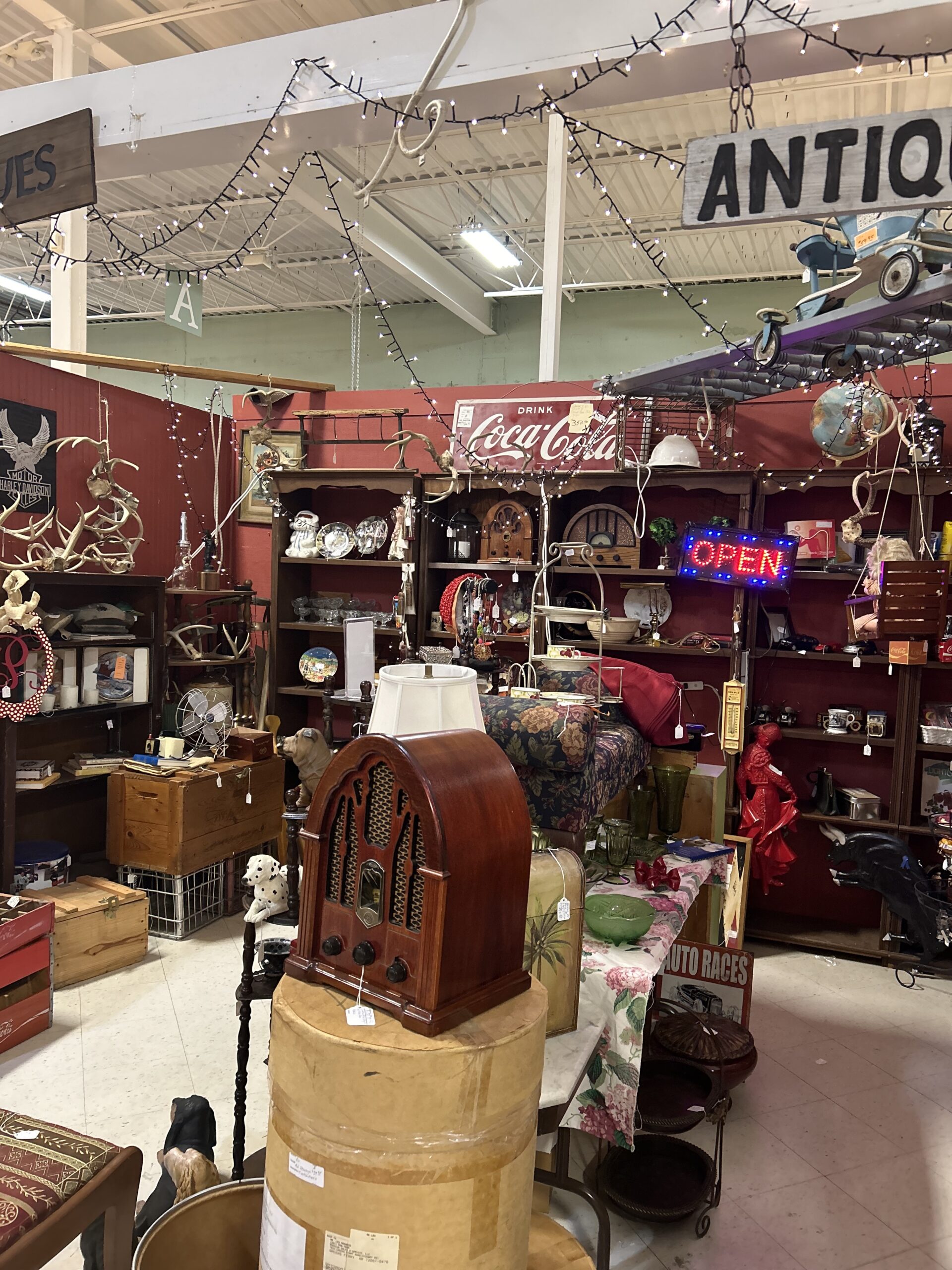
Many malls will include clear descriptions in their lease of prohibited items, or a percentage amount that has to be “true vintage or antique” versus wholesale or reproduction.
Some malls limit or prohibit things like:
- Handmade items
- Reproductions
- Painted furniture
- Clothing
- Holiday merchandise
- Candles
- Food products
If you have a particular niche or product you are looking to sell, make sure it fits the mall’s policies.
Interested in stocking Wholesale Products? Grab my guide for free!
7. Ask About Booth Appearance Standards
A well-maintained antique mall benefits everyone! Booths that get shabby start attracting those garage-sale customers, which aren’t always the best shoppers.
In the lease, look to see if there are standards listed for:
- Cleanliness
- Dusting
- Lighting
- Empty shelves
- Overall booth appearance
It’s also helpful to ask how often booths are inspected and whether vendors are notified if something needs attention.
Some malls may have these standards but never enforce them, which is almost the same as having no standards at all.


8. Understand Security Policies
Unfortunately, theft happens in retail, and antique booths are no expection.
Thankfully in my personal experience, I have never had anything really valuable go missing from one of my booths. And probably less than $100 total of merchandise in 14 years of business.
But to be a wise and prepared business owner, go ahead and ask:
- Are there security cameras?
- Are locked display cases available?
- How are thefts handled?
- What happens if an item is damaged?
No antique mall can prevent every incident, but it’s reassuring to know they take security seriously.
9. Know When You’ll Get Paid
Cash flow matters, especially when you’re starting out.
Every mall pays on a different schedule, and you need to understand yours.
I’ve been in malls where vendors are paid twice a month and malls where they are paid only once. I’ve also been in malls where rent is deducted from your paycheck, and others where rent was expected to be paid in cash.
To clarify, ask:
- How often are vendors paid?
- Do they offer direct deposit?
- Will you receive detailed sales reports?
- Is there an online portal where you can track sales?
- Is rent taken out of your sales automatically, or do you provide your own rent payment?
The easier it is to understand your sales, the easier it is to manage your business.
10. Ask About Future Booth Options
Your first booth may not be your forever booth. In fact, at my first mall I moved booths three times!
As your business grows, you may decide you’d like a larger space, or perhaps a smaller one.
Check your lease to see if:
- You can move to another booth if one becomes available. What notice applies?
- There is a waiting list for larger spaces.
- Downsizing before your lease ends is allowed if needed.
Having options gives you flexibility as your business changes.
11. Visit the Antique Mall Like a Customer
This might be my biggest piece of advice.
Before signing a lease, spend some time walking through the mall as if you were shopping. Visit more than once if possible, both on a weekday and weekend.
Pay attention to things like:
- Does the mall feel clean and inviting?
- Are customers actually shopping?
- Do booths look well-stocked?
- Are there empty booths?
- Is the merchandise changing, or does it look like it’s been sitting for months?
One thing I’ve learned over the years is that the cheapest booth isn’t always the most profitable.
It’s so much better to pay a little more in rent for a well-managed antique mall with steady customer traffic than save a few dollars each month in a mall where very little is selling, trust me!
The quality of the mall, and the people shopping there, can make a much bigger difference than the monthly rent.
Final Thoughts
Signing your first antique booth lease is exciting, and it’s easy to let that excitement take over.
But I really urge you to slow down, take your time, read the lease carefully, and ask all the questions you need. A good mall owner will be glad to help you understand exactly what you are signing up for.
And remember that you’re not just renting a space, you’re choosing a business partner. The right antique mall should be invested in helping both its customers and its vendors succeed.
A little research before you sign can save you headaches and help you build a much more profitable booth business.
Want More Help Starting an Antique Booth Business?
Signing the lease is only the first step.
If you’re new to selling in an antique booth, there are dozens of other decisions you’ll need to make—from choosing the right inventory and pricing it correctly to creating displays that actually sell and knowing how often to restock.
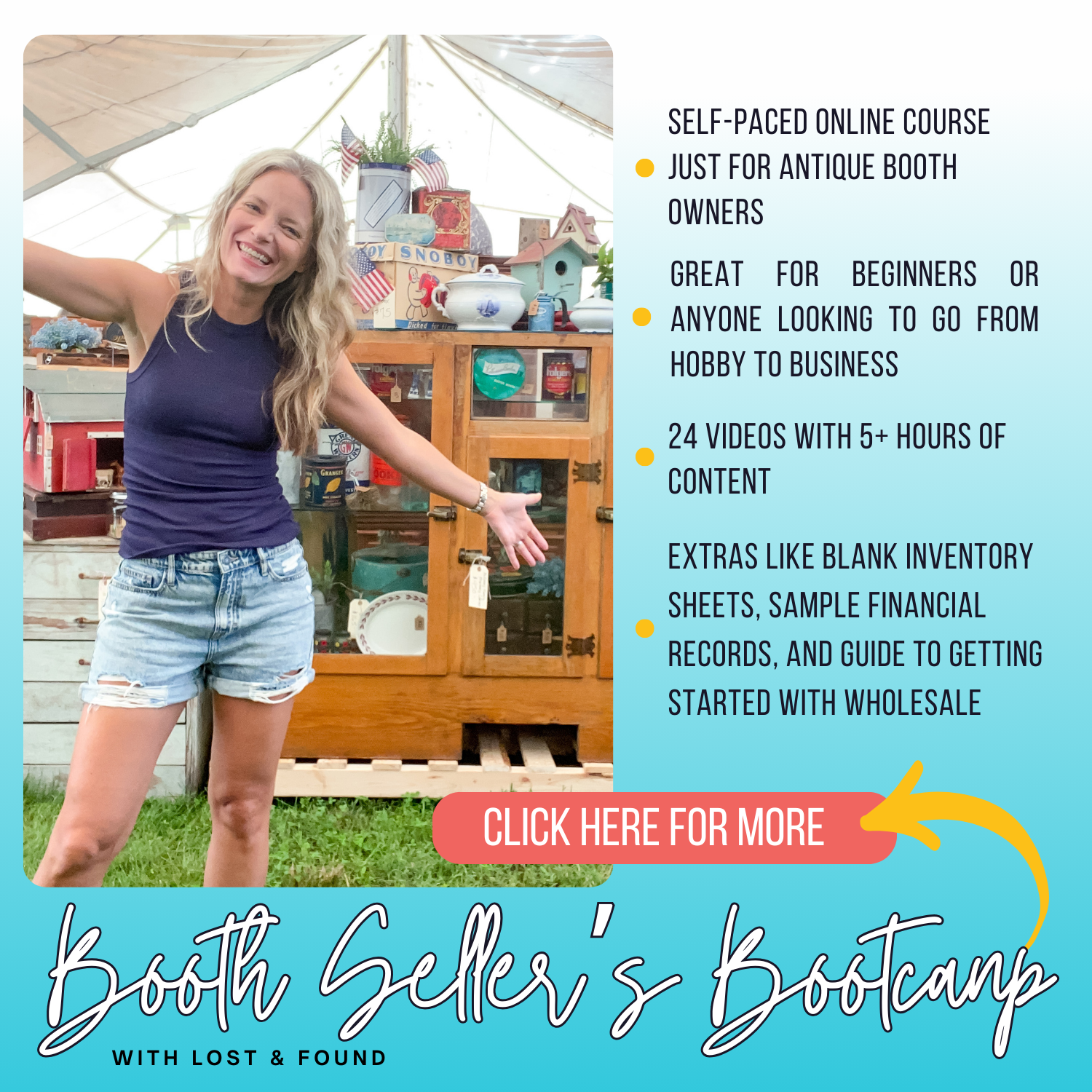
That’s exactly why I created Booth Sellers Bootcamp.
Inside the course, I walk you through the same strategies I’ve used over the years, along with the systems that have helped hundreds of booth sellers build profitable businesses with more confidence and fewer costly mistakes.
If you’re serious about making your antique booth successful, I’d love to help you get started.
👉 Learn more about Booth Sellers Bootcamp by clicking here.