
I have a theory that you can never have just one piece of antique majolica.
You find one plate at an estate sale, fall a little bit in love with the color and detail, and six months later you’re figuring out where to put the next five pieces.
Majolica is one of those antiques that’s hard not to notice. It’s colorful, often a little quirky, and usually covered in leaves, flowers, birds, fish, or some other wonderfully over-the-top Victorian design.
If you’ve started spotting it while thrifting or antique shopping, here’s a quick guide to what majolica is, where it came from, and what to look for when you find a piece.
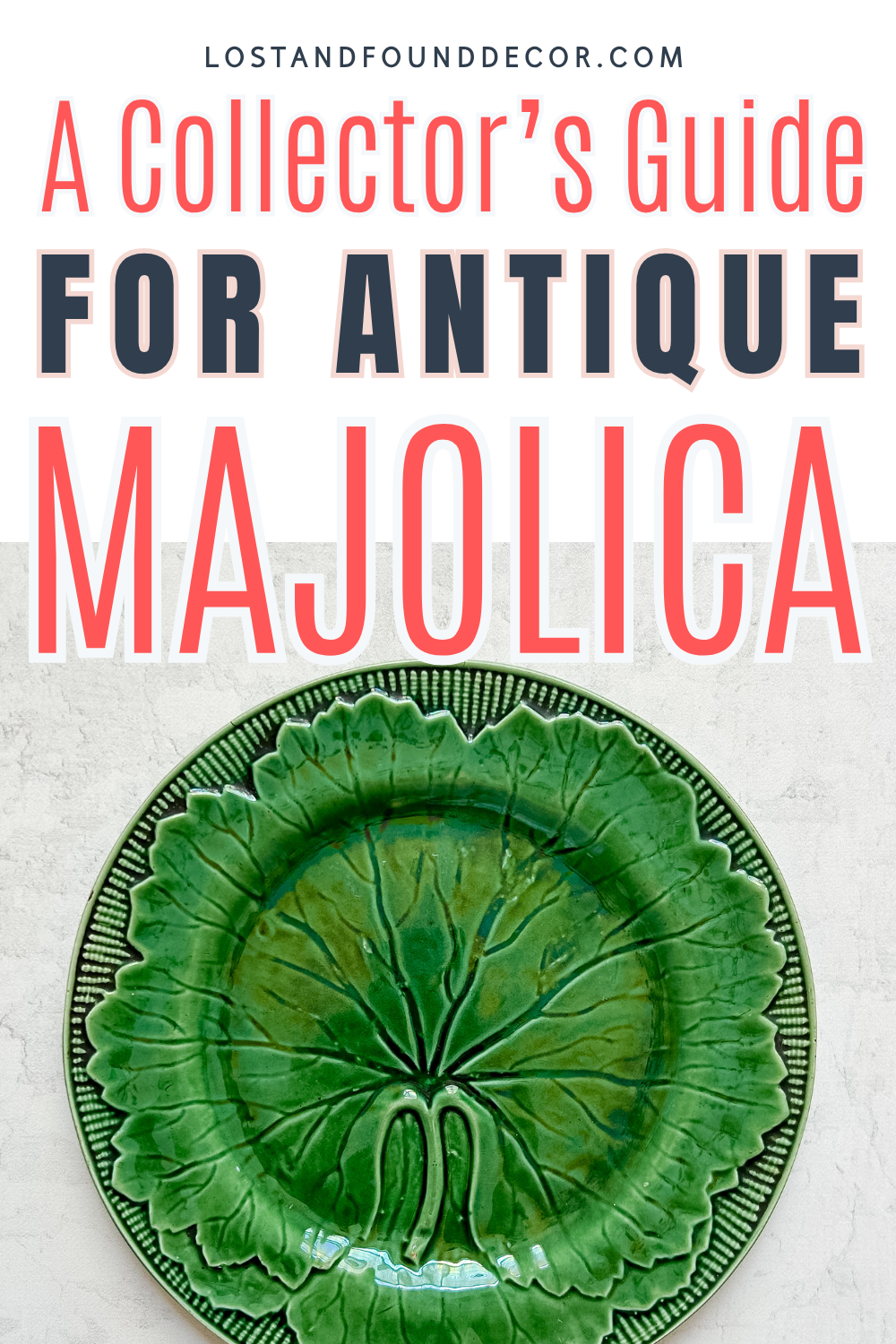
What Is Majolica?
The word majolica can actually mean two different kinds of pottery.
The original form, usually spelled maiolica, was Italian tin-glazed earthenware made during the Renaissance. It had a white surface that artists painted with detailed scenes and decorative designs.
But when antique lovers talk about majolica today, they’re usually talking about something different: the brightly colored, molded pottery that became popular during the Victorian era. And that’s what we are focusing on today.
This is the majolica you see shaped like cabbage leaves, strawberries, flowers, fish, birds, shells, and all kinds of other natural forms.
Instead of painting designs onto a flat white surface, Victorian majolica was molded and covered with raised figures, accents, and colorful glazes.
Those translucent glazes settled into the details and created the rich greens, blues, yellows, pinks, and browns that make these pieces stand out.
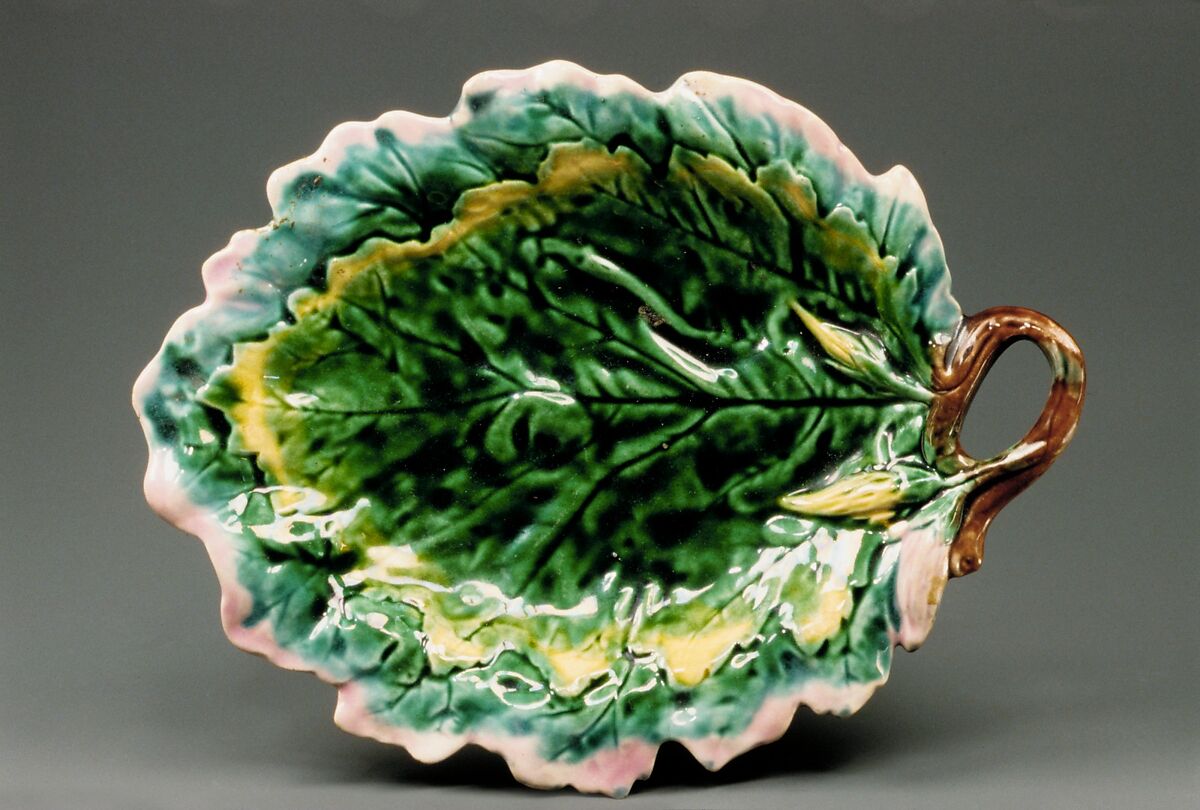
Griffen, Smith and Hill
Bread Plate, 1880–89
A Little Majolica History
Victorian majolica really took off after the Great Exhibition in London in 1851.
There an English pottery company named Minton introduced a new type of brightly colored lead-glazed pottery, originally calling it Palissy ware, after the 16th-century French potter Bernard Palissy. Over time though, people started using the term majolica instead, and it stuck.
The timing was perfect for the Victorian era.
Decor during that time was fascinated with nature-inspired scenes, rich colors, and making everyday objects feel a little extra, and majolica checked every box.
Production became especially important in Staffordshire, England, the center of the British pottery industry. Major companies like Minton, Wedgwood, and George Jones produced beautiful examples, and the style eventually spread throughout Europe and into the United States.
American companies made majolica too, including Griffen, Smith & Hill, which sold its pottery under the name Etruscan Majolica starting in the late 1800s.
By the early 20th century, decorating tastes had changed and majolica started to fall out of fashion. The pieces we prize today are holdovers from this era of the majolica heyday, and thankfully they survived.
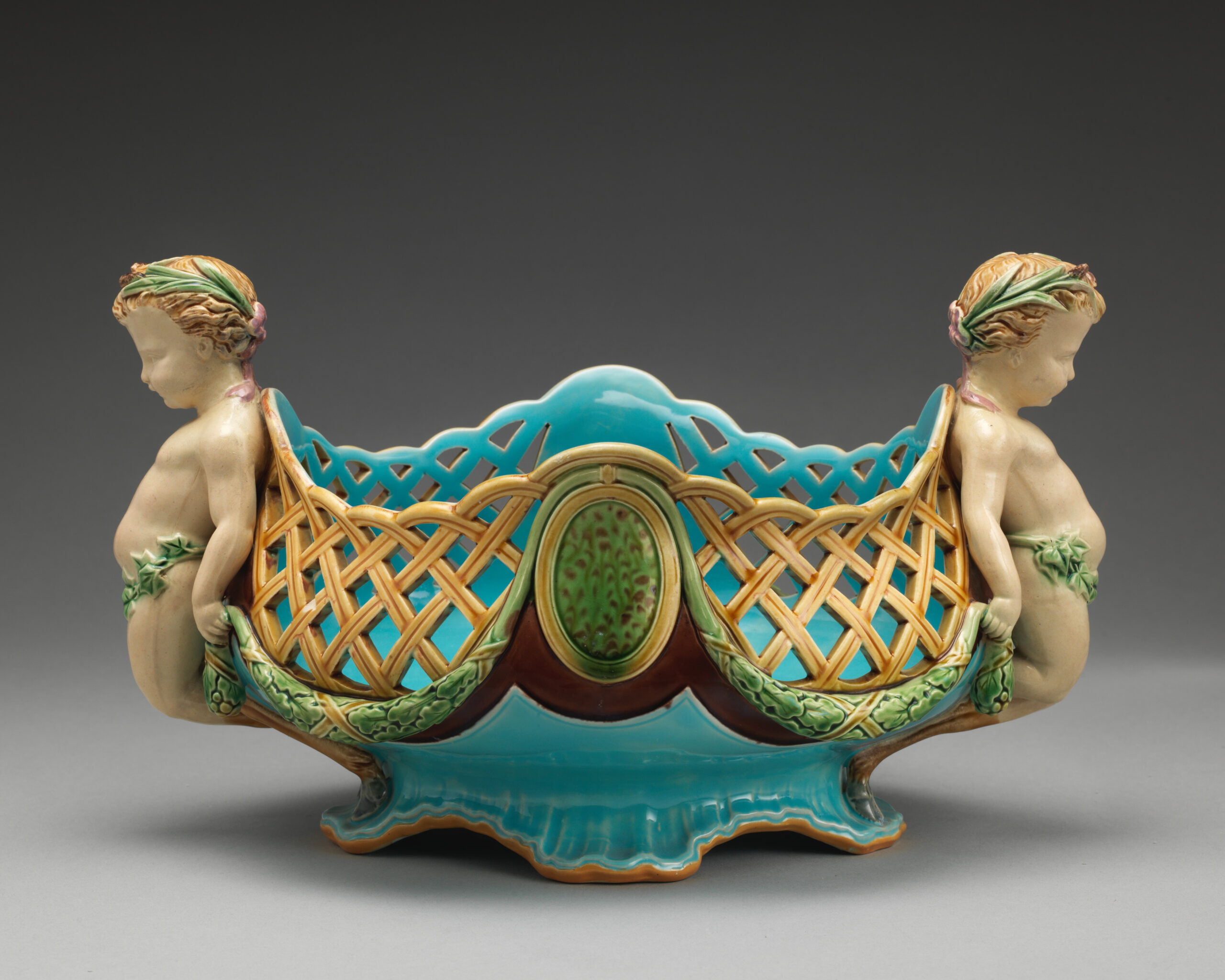
Minton Basket, 1868
How Was Majolica Made?
Most Victorian majolica was made from molded earthenware pottery.
The clay was shaped in molds, fired once in a kiln, then decorated with colored glazes and fired again.
Those glazes are one reason antique majolica has so much depth. The colors are translucent, so they pool in the deeper areas of the design and highlight all of the molded details.
And yes, those original glazes often contained lead, which is something to keep in mind if you’re collecting antique pieces today. Because of this, I would use antique majolica purely for decor that you set and forget, not for items that ever come into contact with food.
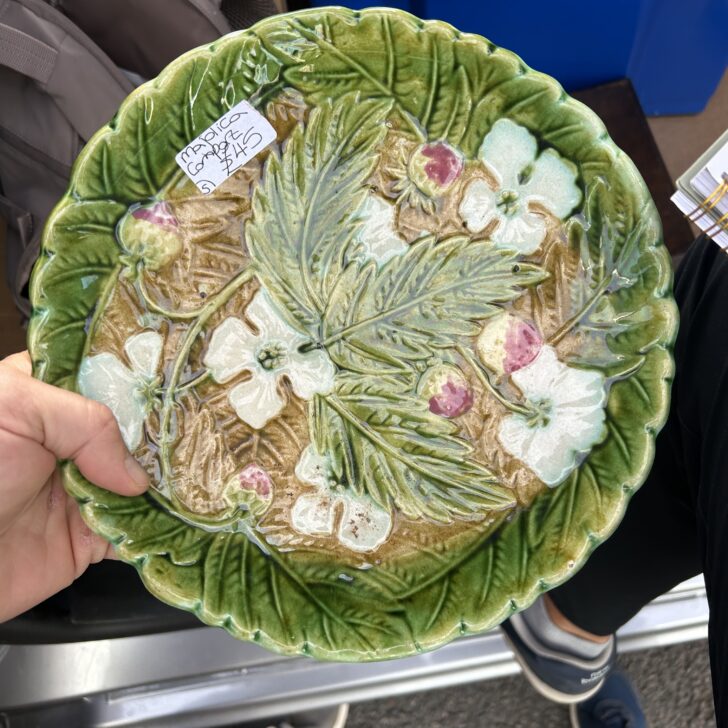
How to Spot Antique Majolica
There isn’t one foolproof way to identify antique majolica, but there are several clues I look for.
First, pick it up.
Older majolica often feels surprisingly weighty for its size. Many modern reproductions are lighter and thinner.
Look at the detail.
Good antique majolica usually has crisp molded decoration and rich glaze colors. Cheap reproductions often have softer details, sloppy glaze painting, or colors that look a little too bright and flat.
Check for marks.
Minton, Wedgwood, and George Jones marked much of their produced pieces, but plenty of genuine majolica was made without a factory mark.
You may find impressed names, numbers, registration marks, or date codes on the bottom however.
Watch for reproduction clues.
Many original Victorian majolica pieces were made by pressing soft clay into a mold, almost like pressing dough into a shaped pan. This created a thick, sturdy piece of pottery with crisp raised details on the outside.
Many later reproductions were made using a method called “slip casting,” instead. In that process, liquid clay is poured into a hollow mold and forms a shell along the inside walls of the mold. With this method the walls are thinner, and so sometimes you can see or feel a faint bit of the outside design, inside the piece.
So if you pick up a majolica bowl or pitcher and the inside is smooth while the outside is heavily molded, that can be a good sign. If the outside pattern clearly shows through on the inside, it may point to a later reproduction.
My best tip though . . . the more majolica you handle, the easier it gets. There’s no substitute for picking up pieces at antique malls and shows and getting familiar with how old examples feel.
Majolica Makers to Know
You absolutely do not need to memorize every maker to enjoy majolica, but there are a few names worth knowing.
Minton produced some of the most elaborate Victorian majolica, including large centerpieces, animal pieces, serving dishes, and highly detailed figural designs. Rare examples can sell for thousands of dollars.
George Jones is another major name. His majolica is especially known for beautiful color and naturalistic designs. Apple Blossom, Pond Lily, and Calla Lily are some of the better-known patterns.
Wedgwood also made high-quality majolica and usually marked its pieces clearly, which can make it a nice maker for newer collectors to learn.
In the United States, Griffen, Smith & Hill made Etruscan Majolica. Their Shell and Seaweed pattern is one of the most recognizable American majolica designs.
You may also run across pieces by Joseph Holdcroft, French makers such as Sarreguemines, and Portuguese pottery by Bordallo Pinheiro.
Bordallo Pinheiro pieces are still being manufactured today. So if you’re going for the look more than the date, you can find more affordable new pieces of this maker that can work for your decor.

What Types of Majolica Are Collectible?
Honestly, almost anything interesting can have a collector, but there are definitely a few categories people seem especially drawn to.
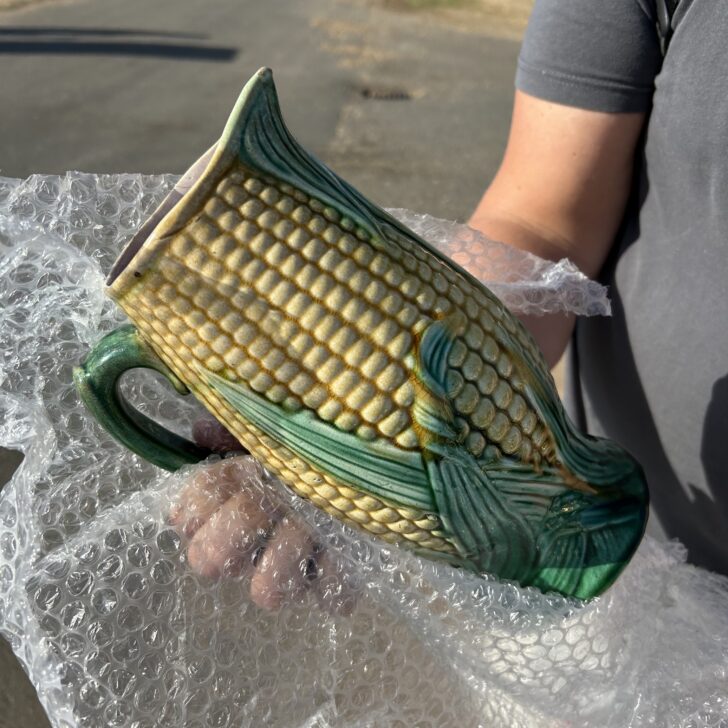
Oyster plates, figural pitchers, cheese keepers, game dishes, serving pieces, and anything decorated with animals tend to get a lot of attention.
Birds, rabbits, foxes, fish, shells, strawberries, asparagus, corn, cabbage leaves…if it looks like something pulled straight out of a Victorian garden or dining table, there’s probably a majolica version of it.
Rare marked pieces by important makers can bring serious money, but there are also plenty of pretty unmarked plates and bowls that are still affordable.
That’s actually one of the reasons majolica is fun to collect. You can spend $40 on a decorative plate or thousands on a rare museum-quality piece.
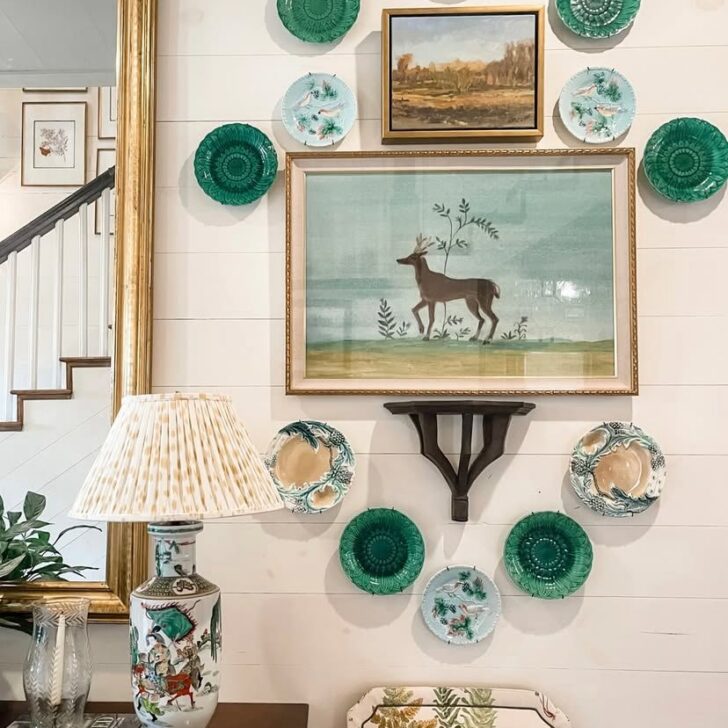
original source unknown, via Pinterest
Where to Find Majolica
Majolica still turns up in all the usual places antique lovers hunt.
Estate sales, flea markets, antique malls, and thrift stores are all worth checking.
I especially like estate sales because collections sometimes sit in homes for generations without anyone paying much attention to what they have.
If looking online, eBay sold listings are useful for researching value, while auction sites like LiveAuctioneers can help you see what higher-end pieces are bringing.
If you start getting serious about collecting, Strawser Auction Group in Indiana is also worth knowing. They specialize heavily in majolica, and looking through their auction results is a great way to learn makers, forms, and values.
If you think you’ve found something particularly unusual, marked, or valuable, don’t rush to price it. Check completed auction results and specialist references first.
Decorating With Majolica
Of course, my favorite part is actually using antique pieces in your home!
Majolica looks beautiful grouped together in a hutch or china cabinet, especially when you mix plates, pitchers, and serving pieces in different heights.
You can also hang majolica plates on the wall, work a few pieces into open shelving, or use one colorful piece in a vignette with wood, old books, greenery, or other natural textures.
You definitely don’t need an entire cabinet full of it, for some decor styles that can feel overpowering because it’s so colorful and rich.
Sometimes one bright green leaf plate or quirky pitcher is enough to add personality to a space.
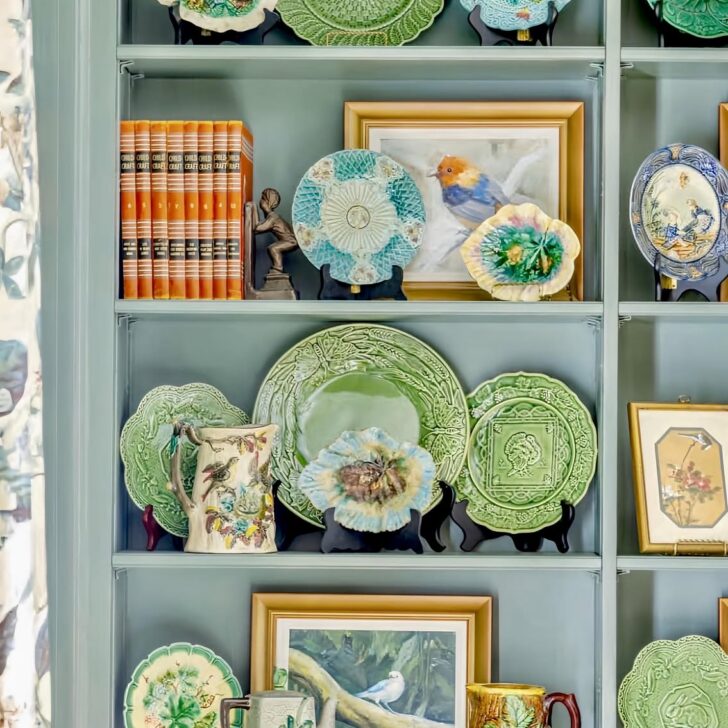
original source unknown, via Pinterest
If You Want to Start Collecting
My biggest advice is simple: start looking.
Pick up pieces when you’re at antique stores. Turn them over, look at the glaze, feel the weight. Learn the common maker’s marks so you can spot them quickly.
The more you handle antique majolica, the more you will start noticing the differences in these pieces versus other types of pottery.
And don’t feel like you have to collect only rare or expensive pieces, some of my favorite antiques are the ones I bought simply because I liked them.
That’s really the fun of collecting majolica too.
You can chase important makers and rare patterns if that interests you, or you can just buy the green cabbage plate that makes you happy.
Both count!
You may enjoy these other posts on antiques and collecting!
A Starter Collector’s Guide to Department 56 Christmas Houses
Decorating With Antiques: 10 Easy Pieces to Use in Almost Any Home
15 Best Selling Vintage Christmas Collectibles
Blue and White Decor : Why It’s Timeless and How to Use It
Liz
Wednesday 16th of September 2026
Very interesting! Your appreciation has rubbed off on me :). Always enjoy learning the history behind craftsman pottery.